
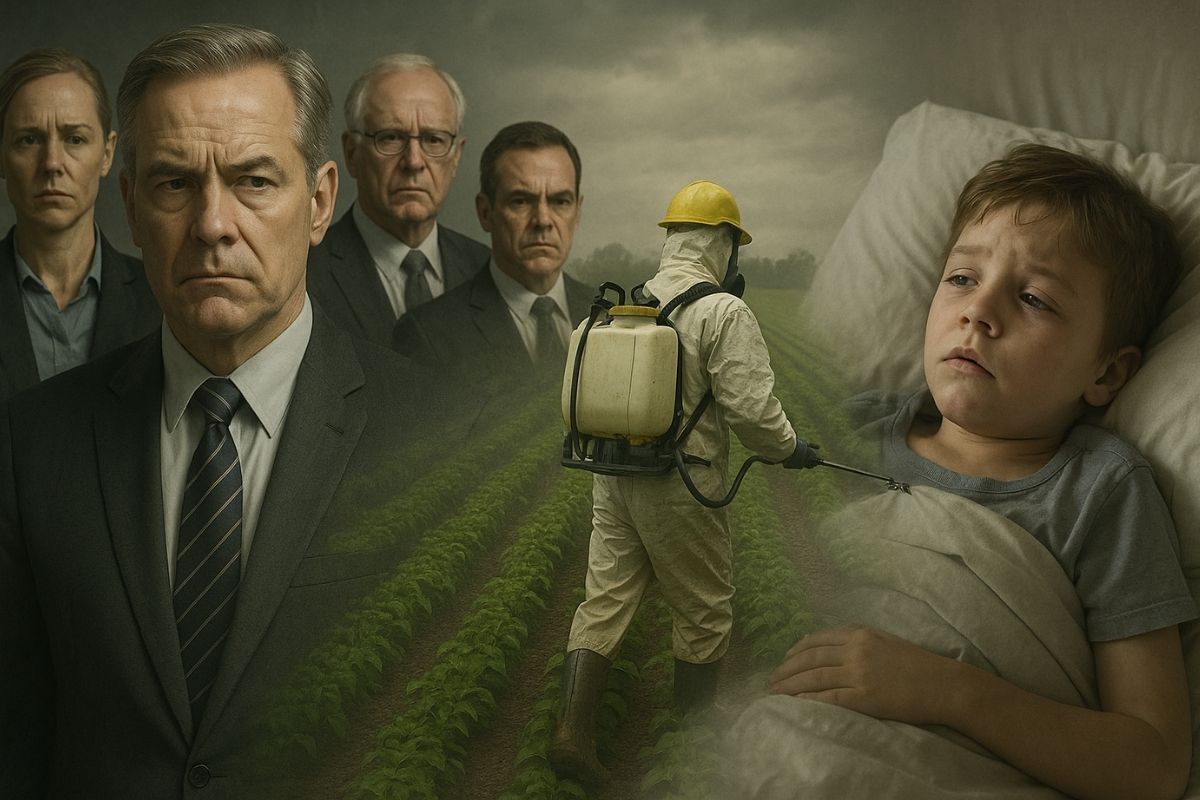
The Hidden Truth About Our Food: How €20 Trillion Annually Destroy Life on Earth
Dear audience, let’s debunk one of the greatest myths of our time and put the facts on the table: Why our “cheap” food is actually the most expensive system in human history and how we can turn it into the greatest liberation ever.
Why One Euro of Bread Costs the World Much More
Imagine buying one kilogram of bread for one euro at the supermarket. You pay at the checkout and walk home, convinced you got a bargain. Yet the truth is shocking: that one-euro bread actually costs the global community over seven euros—only those extra six euros don’t appear on your receipt. They are paid through environmental destruction, sick people, millions of climate refugees, and a perverse market manipulation system that destroys humanity’s very foundations.
These hidden costs are called True Costs. According to the FAO, they total an unbelievable €19.2 trillion annually, equivalent to 20 percent of the global economy and larger than China’s GDP.

Cheap Food: The Biggest Misconception
Most people believe cheap food arises from efficient farming. In fact, wealthy nations subsidize industrial agriculture with $650 billion each year. Eighty-seven percent of those subsidies flow to large agribusinesses, driving overproduction of low-quality, pesticide-laden food.
The True Cost Breakdown
Environmental Damage: $7 Trillion
Industrial farming contaminates soils, water, and air, and contributes massively to climate change—costing $7 trillion annually.
Health Costs: $11 Trillion
Pesticide exposure and nutrient-poor diets cause chronic diseases, burdening health systems with $11 trillion per year.
Lost Development: $1 Trillion
Food dumping destroys local markets and costs developing nations $1 trillion in GDP each year.
The Perfect Crime: How US Cotton Subsidies Displaced 10 Million
Between 2000 and 2005, 25,000 US cotton farmers received $3.9 billion in subsidies, selling below cost and displacing over 10 million African farmers.

Migration as a Deliberate Side Effect
This forced migration costs Europe €23.5 billion annually in border control, reception, and integration.
An Oligarchy of Hunger: Six Corporations Control the World
Just six companies dominate seeds, pesticides, fertilizers, and grain trade. They create problems and then sell the solutions.
When Food Becomes Poison: Health Crises
Pesticides, antibiotic resistance, and nutrient loss trigger widespread health crises and untold suffering.
The New Zealand Miracle
In 1984, New Zealand abruptly removed all agricultural subsidies. The result: –50 % fertilizers, +110 % productivity, and +50 % forest cover within 20 years.
Global Transformation in Four Phases
Phase 1 (Years 1–2): Shock
Prices +10–35 %, OECD output –1.1–2.8 %, developing world +0.6 %.
Phase 2 (Years 3–5): Innovation
Organic market +200 %, pesticides –60 %, migration –40 %.
Phase 3 (Years 6–10): Consolidation
New jobs, reforestation, green tech boom.
Phase 4 (Years 11–15): Equilibrium
Stable, fair prices; food security; thriving developing economies.
Historic Savings: €150 Trillion in 15 Years
Transforming the system cuts True Costs by 80 % and saves €150 trillion.
Why the Change Is Inevitable
Five forces drive reform: climate crisis, debt, young voters, recessions, WTO rulings.
Our Mission as Earth Guardians
Practical action: regenerative farming, rewilding, positive Earthprint. No blame, just solutions.
Conclusion: The End of One System, the Dawn of a New Era
Cutting subsidies isn’t a question of if, but when. It’s the greatest opportunity to rebuild a sustainable, just future.