
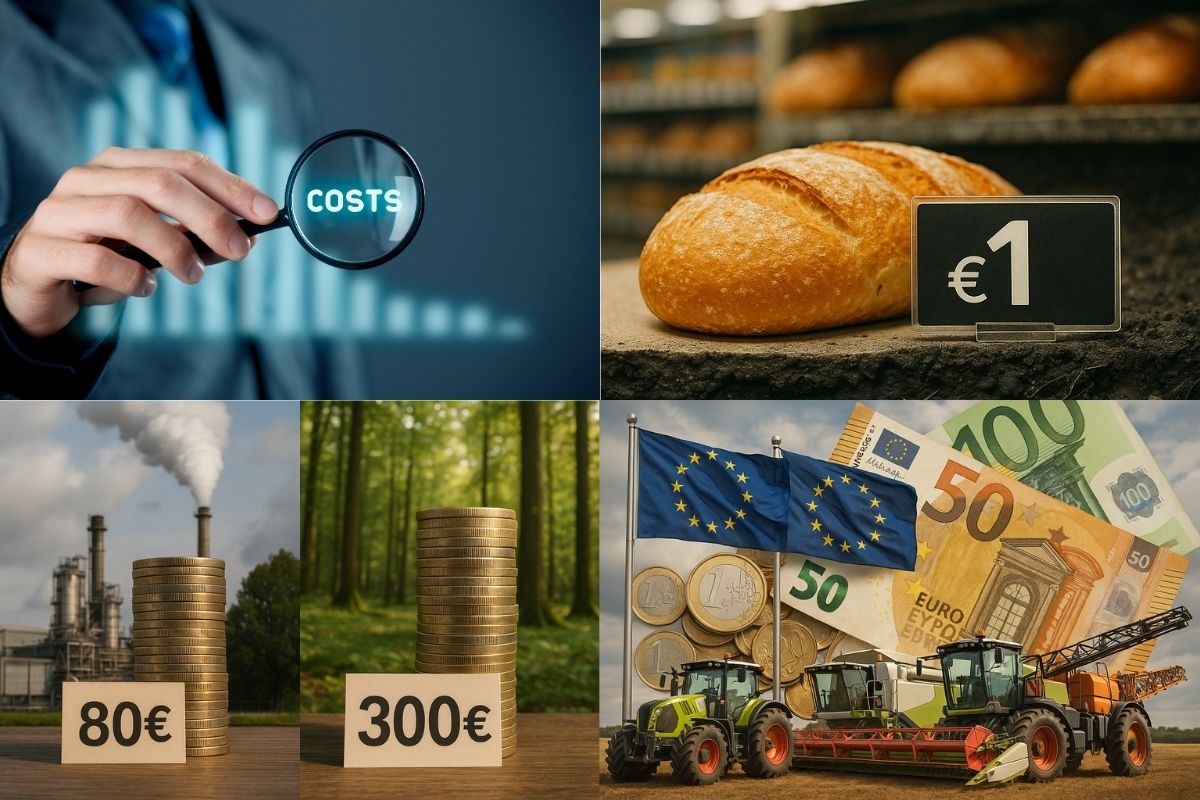
The Hidden Costs of Nature – How Honest Prices Can Save Our Planet
Dear readers,
in a world where intact ecosystems provide services worth $179 trillion annually yet are being destroyed at record speed, it’s high time to honestly price the true costs of our actions. Climate change, species extinction, and resource depletion are happening right now – not sometime in the future. While politicians and courts debate “Rights of Nature” and legal frameworks, there is an immediately effective lever: True Cost Accounting (TCA). Its principle is both brilliantly simple and revolutionary – and if you want to understand why, this article provides all the background, examples, and calculations.
Why We Must Act Now and Cannot Wait
The climate crisis doesn’t pause for political processes. Even as more countries like Ecuador and New Zealand legally recognize Rights of Nature since 2008, real-world enforcement often takes decades. International ecosystem accounting programs like the Gross Ecosystem Product (GEP) are vital steps, but without immediate market pressure, they lose momentum. Meanwhile, rainforests continue to be cleared for soy, soils lose fertility, and industrial animal farming remains a major environmental concern.

What True Cost Accounting Changes
At its core, TCA ensures that every product price fully reflects all costs – not just production, processing, and transportation, but also climate impact, deforestation, water use, pesticide damage, land and air degradation, and social health costs. The price you see at the supermarket checkout often conceals a far greater burden on our planet and our societies. True Cost Labeling makes these hidden costs transparent and visible to consumers and businesses alike.
Step-by-Step Example: Industrial Beef
1. Retail price: €12.00/kg
2. CO₂ cost: 22 kg × €0.30/kg = €6.60
3. Water cost: 8,000 L × €0.005/L = €40.00
4. Soy deforestation: 2.8 kg × €12.80/kg = €35.84
5. Pesticide impact: 7 points × €2/point = €14.00
6. Transport: 8,000 km by ship + 400 km by truck = €220.00
7. Total environmental cost: €316.44
8. True Cost: €12 + €316.44 = €328.44 (+2,637%)
Why Pasture-Raised Beef is a Real Alternative
Extensive pasture-raised beef with no imported soy feeds may cost €35/kg at retail but only €84/kg in True Cost (+140%), because it emits less CO₂, uses less water, and requires minimal transport. The €244.44/kg difference reveals how cheaply industrial meat has been priced at the expense of our planet.
Additional True Cost Examples
– Industrial Chicken: €6.50 → €216.39 (+3,229%)
– Regional Organic Chicken: €24.00 → €50.96 (+112%)
– Conventional Milk: €1.25/L → €151.30 (+12,004%)
– Pasture-Raised Milk: €2.60/L → €20.32 (+681%)
– Cage Eggs (12 pcs): €2.80 → €84.36 (+3,012%)
– Free-Range Organic Eggs (12 pcs): €6.80 → €14.80 (+118%)
How True Cost Labeling Transforms the Market
When consumers see that conventional milk costs €151/L instead of €1.25/L, or beef costs €328/kg instead of €12/kg, immediate market pressure ensues. Supermarkets adjust their product lines, capital flows into sustainable systems, and producers have a clear incentive to change.
Four-Paragraph Law for Maximum Impact
A True Cost Labeling Act with four simple paragraphs can trigger this shift: mandatory display of retail and True Cost, ban on unlabeled products, 18-month transition, and penalties up to 4% of annual revenue. No constitutional amendments or international treaties required – citizen and municipal initiatives suffice.
Unlocking Land Regeneration
Cattle raised entirely naturally in rewilding projects can restore degraded ecosystems through rotational grazing, sequester 1–3 tonnes of CO₂ per hectare annually, and boost biodiversity by 300–500%. This promising approach deserves its own deep dive in a future article.
Revolution Starts on the Shelf, Not in Court
Long-term legal and accounting reforms are vital but too slow. True Cost Accounting delivers instant market-driven change. Every purchase becomes a vote for ecological health and social justice.
“If you really want something done, you have to do it yourself!”