
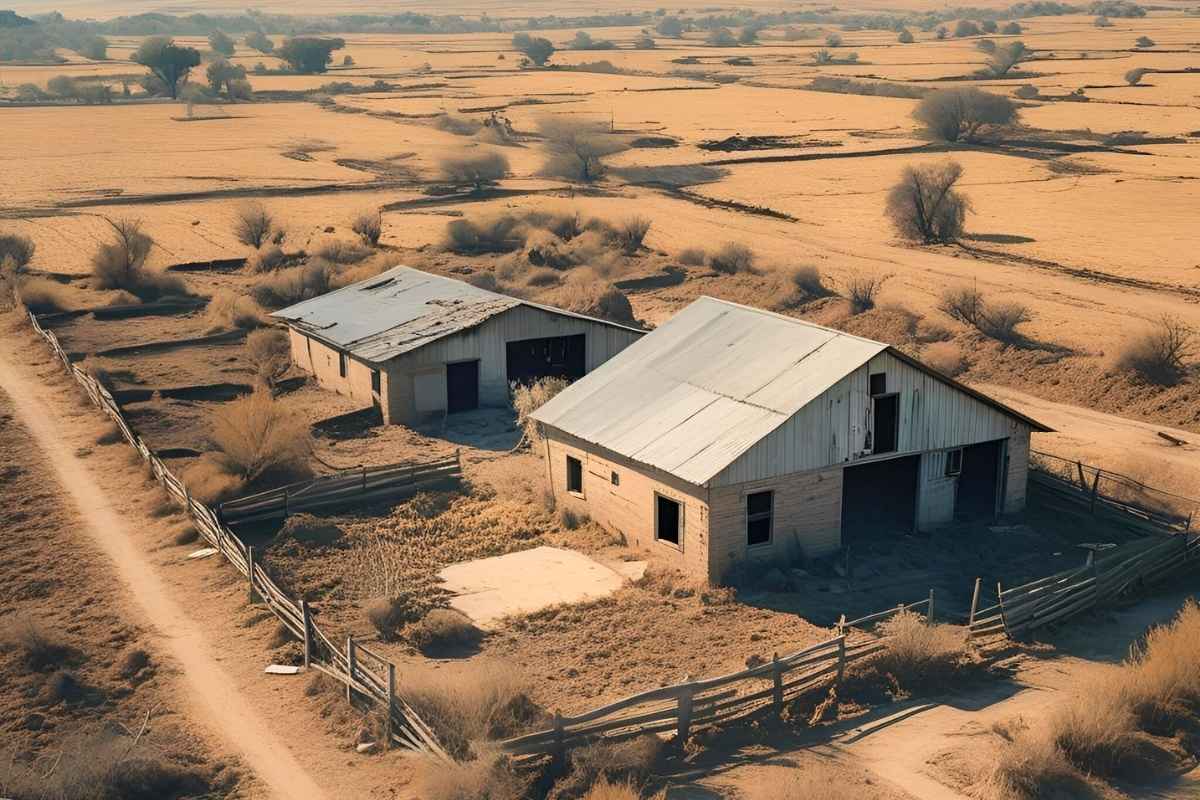
– Impacts on Global Food Security
Land degradation – the deterioration and loss of fertile soils, has serious consequences:
- Less usable land: Already today, about one-third of the world’s agriculturally usable soils are degraded, meaning they yield less or no harvest at all. In regions with dry climates, fertile land is becoming increasingly scarce.
- Declining yields: When soils lose their nutrients, are eroded away, or become unusable due to salinization, crops can hardly grow. The result is lower harvests and rising production costs, as farmers must apply more fertilizer and water to compensate, until ultimately abandoning the land because nothing grows anymore.
- Increasing risk of hunger: Already, 1.5 billion people worldwide are directly affected by soil degradation. In poorer countries where many people depend on farming, the loss of fertile land can destroy their only livelihood. This increases poverty and hunger and forces people into further harmful land use practices – creating a vicious cycle.
- Growing competition for land: The less fertile land there is, the more competition arises among farmers, livestock keepers, and other users for the remaining land. This often leads to conflict and worsens social tensions.
- A global issue: Demand for food is steadily increasing due to population growth. Yet around 10 million hectares of arable land are lost every year – about one-third the size of Germany. At the same time, the world population is expected to reach nearly 10 billion by 2050, further increasing pressure on agriculture. Currently, global agriculture compensates for land loss by clearing fertile tropical forests – a practice with devastating consequences.
- Long-term impacts: Although global food production is still sufficient today, it will become increasingly difficult to feed everyone in the future if soil degradation continues. The Global South is especially vulnerable, but risks for crop failures and price fluctuations are rising worldwide.
Summary:
Land degradation reduces the quantity and quality of available farmland, leads to lower yields, and increases the risk of global hunger crises.
It directly threatens the food security of millions of people – and the problem is worsening every year.
Now is the time to switch to sustainable, regenerative agriculture.
Author: Francesco del Orbe 🌍


