

“The world would be many times better if we listened more to our common sense, took time for each other and treated everything with respect – nature, animals and ourselves.” (Francesco del Orbe)
Why the climate crisis affects everyone
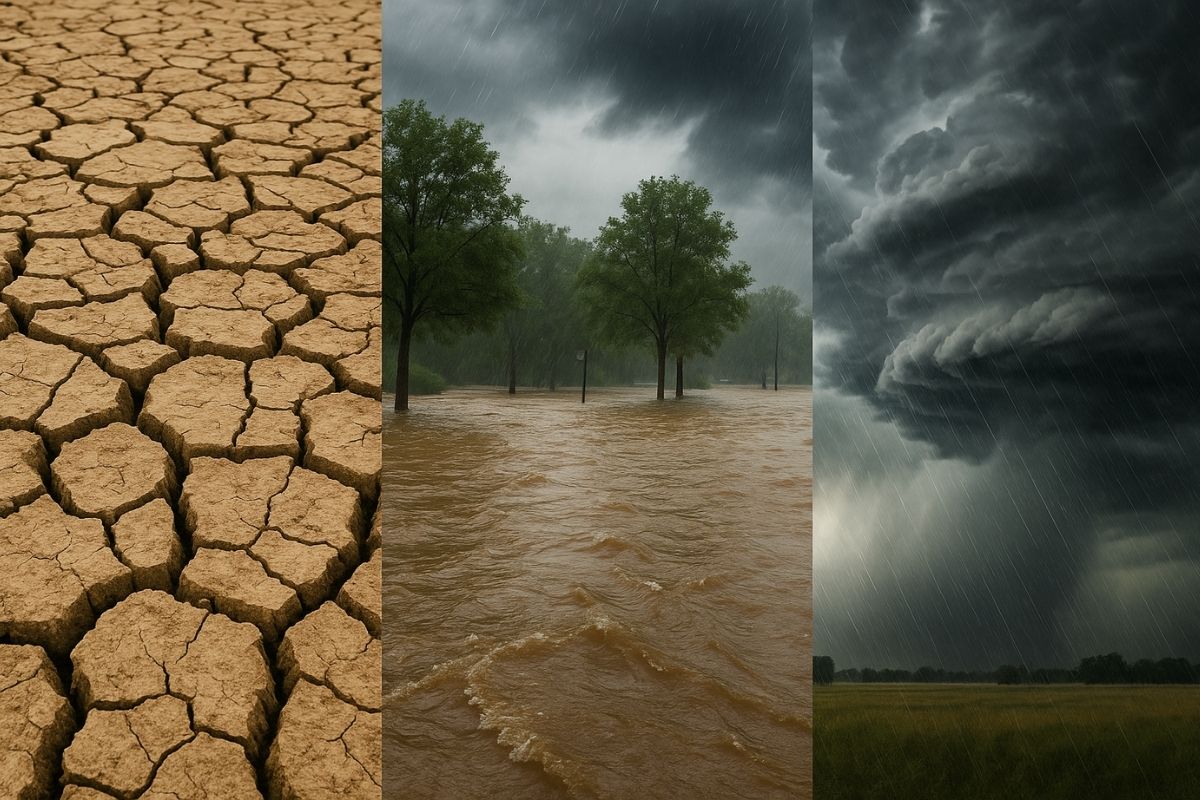
Many people perceive the climate debate as abstract or remote – but climate change already affects us directly. Whether as a result of droughts, floods or extreme weather: our livelihoods are at stake, globally. The image of the “nursery Earth” illustrates that we must preserve this home for future generations – with the care that real adults would take.
Can individual states make a difference?
China and Australia are regularly highlighted as major emitters and raw material suppliers. Their ability to act is undoubtedly significant; Australia, for example, exports large quantities of coal, China is the world leader in emissions. Yet, even if individual countries lead the way, a look at the facts shows that the global climate cannot be “saved” by the actions of individual players. Instead, a systematically networked approach by all actors is essential. International institutions, science and hands-on initiatives repeatedly emphasise that multilateral cooperation has a more lasting impact than isolated top performances by individual countries.
Millions of NGOs, a fragmented movement: Why quantity alone is not enough
It is estimated that there are over ten million NGOs worldwide working in different social spheres; tens of thousands are dedicated to environmental and climate protection. Networks like the Climate Action Network, Green 10 in Europe or platforms such as NAZCA bring together the commitment and expertise of local initiatives, science, business and governments. Yet, there is a key weakness: despite the huge diversity, there is often a lack of common strategy, overarching goals and binding rules to create synergies. As a result, parallel projects and competition for funding, visibility or political influence keep arising – producing a “fragmented” movement in which resources are not systematically pooled.
The competition narrative – and what it prevents
Public debates often suggest that climate protection is a race between states or industrialised nations. Whoever is “ahead” is seen as a role model – but this mindset rarely leads to more climate protection. On the contrary: competition-driven mechanisms (like strictly upholding antitrust rules or going it alone nationally) often prevent cooperation and block the necessary pooling of strengths. Studies show that many companies and organisations do not participate in joint sustainability initiatives for fear of competition regulations – 92% of companies in several EU countries therefore call for a reform towards cooperative climate rules. The result: many good approaches fail, not due to lack of motivation, but due to systemic barriers.
What is behind the term “planetary stewardship”?
In contrast to the competitive principle stands the approach of “planetary stewardship”. It’s about developing a shared attitude to all action: we see ourselves as caretakers of the Earth who shape their own impact – the so-called “Earthprint” – positively, not just doing the least harm possible, but actively healing the planet and restoring livelihoods. This requires new forms of cooperation beyond borders and interests. “Planetary stewardship” means inviting all stakeholders – from the neighbourhood to the global community – to connect meaningfully, learn from one another and co-create solutions.

Examples of successful cooperation instead of competition
Examples from all over the world show the difference:
While Germany’s energy transition is coordinated by the government and is broadly supported by business and the public, this brings about multi-layered and resilient structures against dependencies and climate damages.
The international climate policy “CHAMP” programme shows that multilateral coalitions – i.e. cross-country teams with shared goals and transparency – can actually provide an enormous boost to implementing global climate goals.
In Kenya, for example, lost wilderness has been restored and CO₂ sequestered while generating income thanks to the collaboration of communities, businesses and international funds.
These examples show: Only where cooperation and shared knowledge come first, do lasting success and durable improvements arise.
Scientific findings – and why technical progress alone is not enough
Studies show that nature-based solutions – such as restoring healthy ecosystems like forests, wetlands or green areas – absorb CO₂ more quickly and effectively than the currently available technical methods. States and organisations are part of the problem, but also of the solution – but only if they open up to joint, scientifically sound strategies and are willing to link local, regional and international measures.
Fragmented governance structures and a lack of bridges between action levels are therefore identified as one of the greatest obstacles to effective climate protection in scientific analyses. Synergies always arise when networks, platforms and open initiatives work in a connecting way and do not insist on national go-it-alone approaches or exclusive projects.
Ways out of fragmentation: models of cooperation and recommendations for action
In the light of research and practice, four levers are decisive:
1. Revolutionising narratives: media, education and NGOs must make the importance of cooperation, shared responsibility and planetary stewardship central messages.
2. Institutional reinvention: emergency platforms, multilateral coalitions such as CHAMP and institutionally anchored citizen participation must replace competitive structures and invite society to join in.
3. Reforming law and funding: sustainability collaborations must be legally safeguarded, and funding models should explicitly promote multi-tiered, joint projects – not privilege solo initiatives.
4. Education & empowerment: even in schools and adult education, joint action along the Earthprint principle can be anchored.

The image of the “nursery Earth” – responsibility and invitation to participate
The central message is: There is no institution, no state, no organisation that can save the world alone. Rather, everyone – politics, business, society and every individual – is called upon to act and take responsibility for the Earth. The Erdenhüter movement, as part of the GARN Alliance, sees this as an invitation: anyone can start today to make the world a little better. And: The complex Earth system can be kept stable through many small, positive contributions – if we consistently align our thinking and actions towards cooperation, planetary stewardship and respect.
Conclusion: “Just do it – for all living beings!”
The climate will not be saved by a single heroic act, but by the quiet, courageous and networked action of millions. Every new tree, every conversion in livestock farming, every open climate project counts – but these actions only become truly effective when we carry them out together, learn from each other and work with commitment in networks.
Help us create a livable planet for a happy and healthy life together. Now is our time to be stewards of the Earth. Sign the petition, show responsibility and join the global movement. Enjoy responsibly, protect our “nursery Earth” together – that is our mission and our right.
“If you really want to be sure that something gets done, just do it yourself!”


