

Dear readership,
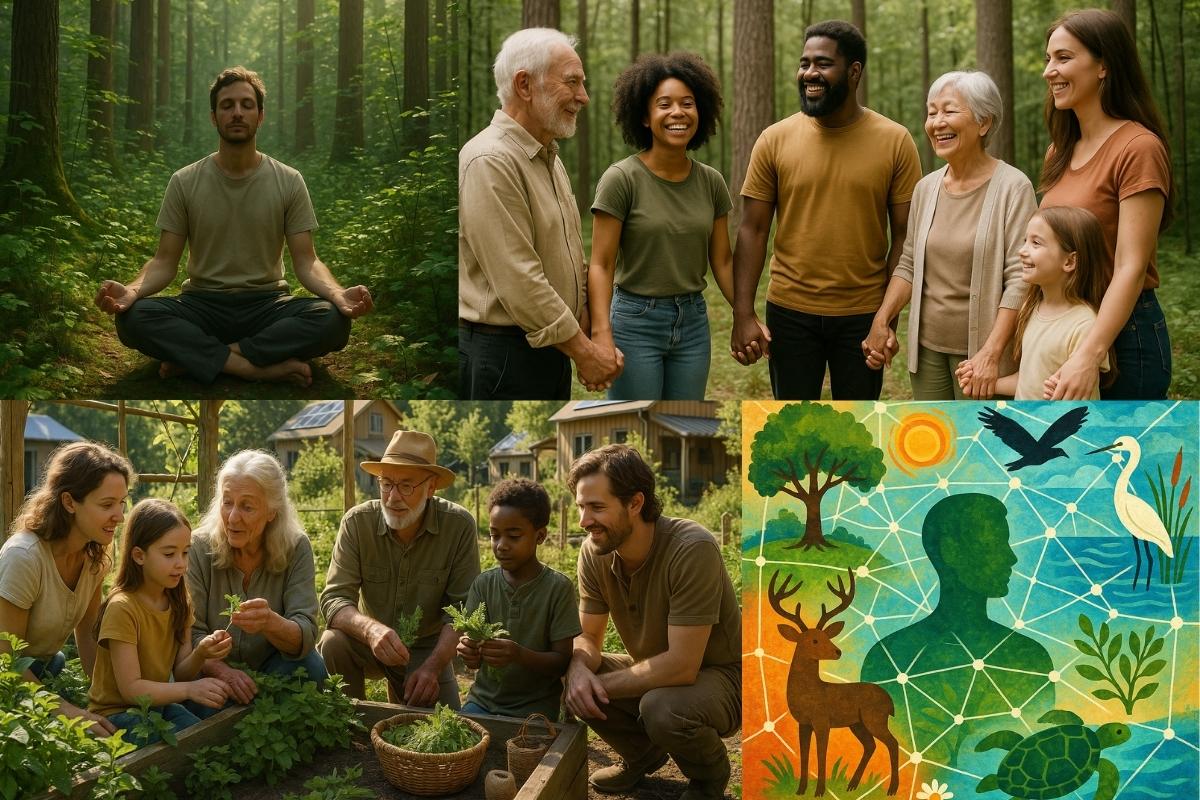
in a time of increasing global warming, rapid species extinction, and growing social divisions, it is more important than ever to rethink our understanding of solidarity and responsibility. For a long time, we spoke of the human family to raise awareness that all people on Earth are inseparably connected. But today, we recognize that this image must not end at the boundaries of our species. A sustainable family model must include all living beings and our entire environment. In this article, we will guide you step by step through the most important questions and facts—from the classical definition to religious backgrounds, all the way to concrete approaches such as rewilding and Earthprint.
When the Focus Is Only on Humans
The concept of the human family is based on a fundamental idea: every person is part of a big, global home where cultural, social, and national borders play no role. This teaching has undoubtedly sparked impulses for peace and encouraged people to build bridges. However, as long as our perspective only extends from human to human, a crucial element remains overlooked: the natural foundations of life on which we depend, and which, if ignored, threaten to cause the entire structure to collapse.
Our Shared Home: Thinking Nature into the Equation
Pope Francis expands this image in his encyclical Laudato si’: our Earth is our common home, inhabited not only by humans but also by plants, animals, soils, and water. This cosmic-ecological thinking focuses on the interconnectedness of all systems. For example, peat bogs—once considered useless swamps—are now recognized as outstanding carbon sinks. If we only see the bridge between humans, we overlook how crucial intact peatlands are for the global climate—and thus for our future.
Who Belongs to the Family? A Look at Religious Paths
The Unifying Bond of Religions
Many of the world’s faith traditions are deeply inclusive and refer to all creatures as “brothers” and “sisters”:
- Judaism: The principle of Tikkun Olam (“repairing the world”) obliges believers to preserve and nurture creation.
- Christianity: Fratelli tutti calls for global brotherhood and sisterhood beyond all borders.
- Islam: The concept of Umma connects all believers, and the principle of rahma (compassion) extends to all sentient beings.
- Buddhism: Metta (loving-kindness) invites goodwill toward all sentient beings.
- Hinduism: The teaching of Ahimsa (non-violence) respects every creature as an expression of the divine Atman.
- Indigenous traditions: Many indigenous cultures view humans, animals, and plants as equal members of a great web of life.
- Anthroposophy: Rudolf Steiner spoke around 1912 of a cosmic human family that spiritually and soulfully spans all nations and species.
These traditions share the idea of a common origin and the duty of care for all beings.
Who Is Left Waiting at the Door? Limits of Materialistic Worldviews
In contrast, strict materialists and technocrats view nature primarily as a resource: measurable, usable, and replaceable by technical solutions. As long as growth and efficiency are the focus, a narrow utilitarianism threatens to ignore ecological interconnections.
Why We Must Include All Living Beings
- Securing ecological foundations: Intact ecosystems—forests, peat bogs, and coral reefs—perform critical functions such as carbon sequestration and climate regulation.
- Ethics of coherence: Caring for fellow humans requires extending responsibility to animals and plants.
- Pragmatic efficiency: Pure technological solutions for CO₂ removal are costly and slow; natural processes are often faster and more cost-effective.
Criticism of the Narrow Family Concept
Environmental ethicists warn that an anthropocentric family model exacerbates the climate and biodiversity crises. As long as we see Earth as a mere resource, we justify deforestation, industrial livestock production, and monocultures in the name of short-term profits.
Rewilding: Working with Nature, Not Against It
Rewilding reverses this trend: by transforming industrial livestock production into extensive grazing systems, peatlands are rewetted, grasslands regenerate, and endangered species return. Local cooperatives finance this transformation, creating new income for farmers and boosting biodiversity, soil health, and carbon storage.
“If you really want to make sure something gets done, just do it yourself!”
Slogan of the Erdenhüter
Earthprint: Your Positive Mark on the World
While we measure ecological footprints, we should also craft our Earthprint: active, regenerative contributions to the Earth system. An Earthprint arises when we support projects that go beyond compensation to heal ecosystems.
Climate Donations: Small Amounts, Big Impact
Although state-owned enterprises were responsible for over 52% of global CO₂ emissions in 2023, less than 1% of all donations went to truly ecological projects. Just €0.09 per day can fund rainforest protection, sustainable agriculture, and wetland restoration, benefiting local jobs and reducing social inequality.
Conclusion: Our Responsibility as Earth Guardians
The expanded human family includes not only eight billion people but countless species and ecosystems. Only by recognizing all beings and nature as indivisible relatives can we secure peace, justice, and ecological stability.
Join the movement: Sign the petition of the Global Alliance for the Rights of Nature. Live ecopositively, support rewilding projects, and shape your Earthprint.
Act yourself. Transform together.


