
-how does it work and why is it important?
What is CO₂ and how does it get into the soil?
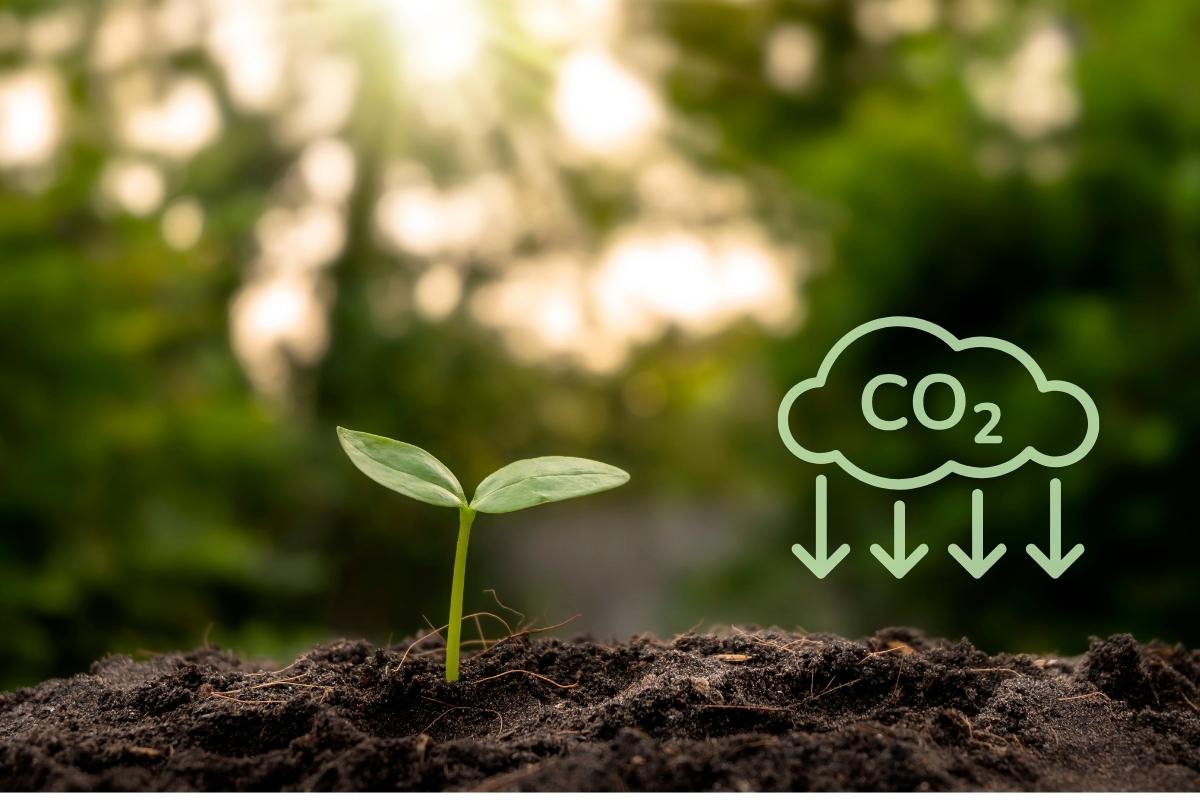
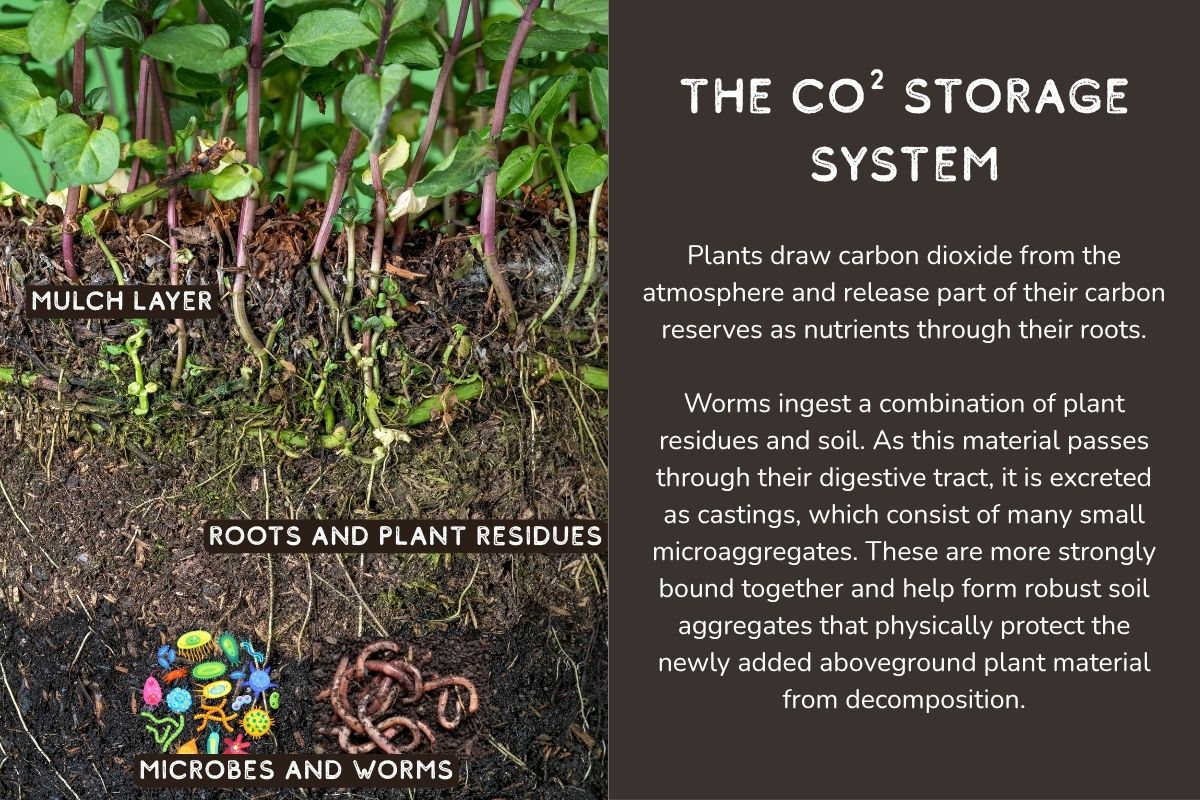
CO₂ (carbon dioxide) is a gas found in the air. Plants absorb CO₂ from the atmosphere and use it – with the help of sunlight and water – to build their leaves, stems and roots. Some of this carbon enters the soil via the roots and dead plant parts.
How does the soil store carbon?
- Photosynthesis: Plants absorb CO₂ and convert it into organic matter.
- Roots & plant residues: When plants grow, die or shed their roots, carbon enters the soil.
- Soil organisms: Microbes, fungi and earthworms decompose these remains. Some of the carbon is released again as CO₂, while another part remains stored in the soil as humus.
- Humus and organic matter: The stable portion of the carbon is retained in the soil for years or even centuries –this is called carbon storage or carbon sequestration.
How much carbon is stored in the soil?
Soils around the world store around 1,500 billion tonnes of carbon – that’s more than in the atmosphere and all plants combined! This makes soil the second largest carbon store on Earth, behind the oceans.
Why is this important for the climate?
CO₂ is a greenhouse gas: The more CO₂ in the air, the warmer it gets on Earth.
Soil acts as a ‘CO₂ sink’: when soil stores a lot of carbon, less CO₂ remains in the atmosphere –which helps to slow down climate change.
But: when soil is disturbed (e.g. by ploughing, deforestation, draining of moors), stored carbon is released back into the atmosphere as CO₂ and re-enters the atmosphere.
How can we store more CO₂ in the soil?
Apply good methods:
- Plough little or not at all: this keeps the carbon in the soil.
- Always keep the soil covered: with plants, mulch or catch crops – this protects against erosion and keeps the soil alive.
- Grow a variety of plants: different plant species promote soil life and carbon storage.
- Use compost and organic fertilisers: they bring new carbon into the soil and strengthen soil organisms.
- Plant trees and shrubs: They store a particularly large amount of carbon and protect the soil
Avoid bad methods!
- Frequent plowing or digging
- Monocultures without crop rotation
- Bare, uncovered soil
- Excessive use of artificial fertilizers and pesticides
What will happen if we don’t take action?
- Soils lose carbon: Intensive agriculture, deforestation and poormanagement practices have already caused soils worldwide to lose 50–70% of their original carbon.
- Accelerated climate change: This carbon loss has caused about a quarter of all man-made greenhouse gas emissions
-
Soils become infertile: Without humus, plants cannot grow as well, and the soil becomes more susceptible to erosion and flooding
Summary
Soils are huge CO₂ reservoirs and help to protect the climate. Through good management, we can store more CO₂ in the soil. If we treat our soils poorly, a lotof CO₂ is lost and climate change gets worse. Everyone can help: in the garden, in the field or through conscious consumption!
Note:
Healthy soils are key in the fight against climate change –they store carbon, protect the climate and ensure fertile fields!
Author: Francesco del Orbe


