
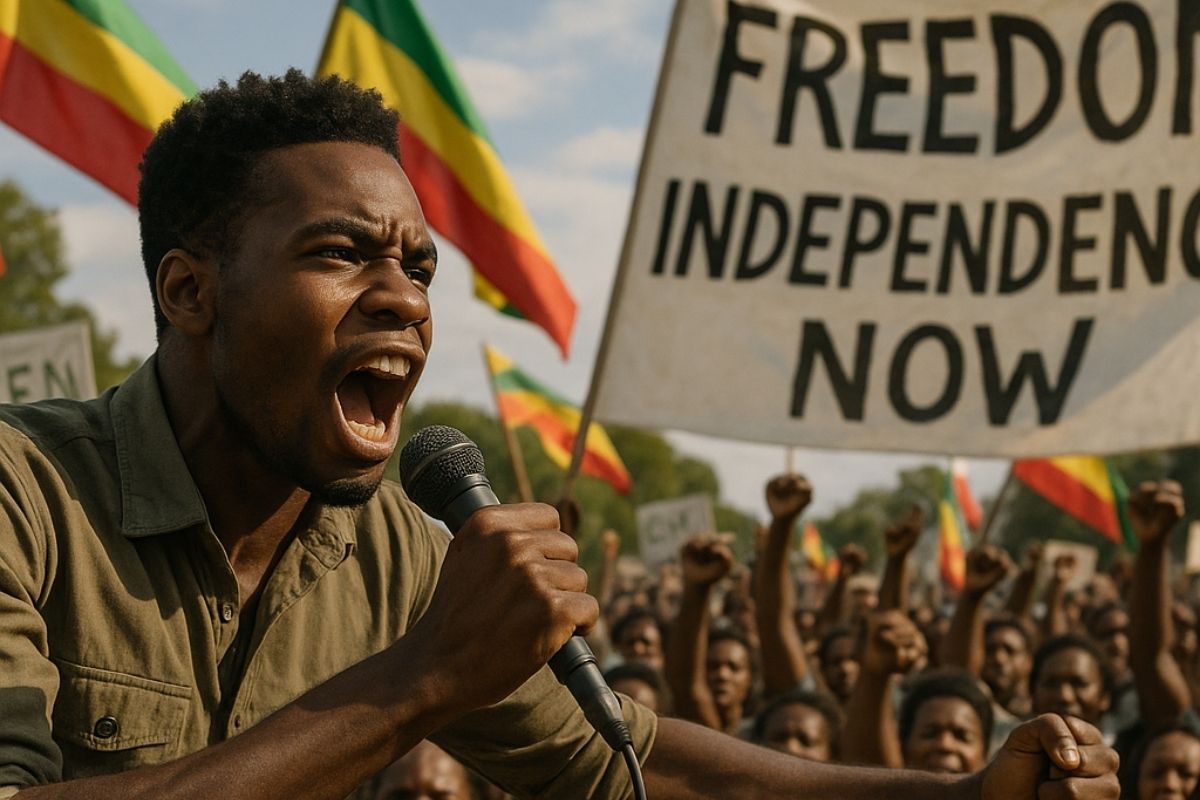
Africa’s Revolt Against Neocolonialism: Why Europe Must Rethink Now
Dear readers, Africa stands on the brink of a historic transformation. Centuries of colonial exploitation have stripped the continent of its resources and sovereignty. Now, a movement for genuine independence—economic, political, and ecological—is rising. Europe must act swiftly to be recognized as an equal partner. This article systematically guides you through the key facts, background, and policy proposals.
France’s Hidden Treasures: Where Do 2,437 Tons of Gold Come From?
Although no gold mines are active today in metropolitan France, the country holds 2,437 tons of gold—fourth largest globally. These reserves originate from colonial mines, overseas territories, and market acquisitions. By contrast, Mali produces about 70 tons of gold annually yet possesses virtually no national gold reserves. Most profits flow to multinational corporations, while Mali receives only minimal license fees and taxes. This pattern shows how former colonial powers fill their vaults without providing lasting benefits to producer nations.
Uranium Exports and Extreme Poverty: The Niger Paradox
Niger ranks among the world’s top ten uranium producers and supplies fuel for France’s 56 nuclear reactors. Yet 81.4% of Nigeriens live without electricity, 40% below the poverty line, 33% of children are undernourished, and 63% of adults are illiterate. Only half have clean drinking water, and 16% have adequate sanitation. Niger’s annual budget (€4.5 billion) is dwarfed by the annual revenue of Orano, the French nuclear giant. This stark disparity reveals that resource wealth does not automatically translate into local prosperity.
The Colonial Monetary Brake: The CFA Franc System
Despite formal independence in the 1960s, France continues to control monetary policy in 14 West African states via the CFA franc. These countries must deposit 85% of their foreign reserves at the French treasury and peg their currency to the euro at a fixed rate. Fiscal and interest rate policies are effectively set in Paris. The forced 1994 devaluation by 50% deepened poverty, while Western Europe retains privileged access to resources, leaving African states economically subjugated.
Beyond France: Shadows of Other Colonial Powers
France was one of several powers that exploited Africa:
- Britain imposed cash-crop monocultures (cocoa, coffee, cotton) in Nigeria, Ghana, and Kenya, displacing local food production.
- Belgium enforced forced labor for rubber and cocoa plantations in the Congo under Leopold II; today multinational mining corporations dominate the landscape.
- Portugal left Angola and Mozambique in prolonged civil wars post-1975, with coffee and sisal plantations concentrating land ownership into few hands.
- Germany committed genocide against the Herero and Nama in Namibia and confiscated land in Tanzania, whose infrastructure deficits persist.
- Spain and Italy shaped borders and political systems in Western Sahara, Equatorial Guinea, and Libya through colonial missions and administration.

The Sahel Alliance Rises
In January 2025, Mali, Burkina Faso, and Niger withdrew from the French-dominated ECOWAS to form the Sahel Alliance (AES). They demanded French troops withdraw, deemed any intervention a declaration of war, and replaced French flags with Russian ones. Ibrahim Traoré (37), a geologist and military officer, banned gold and uranium exports to France. Niger is renegotiating Orano’s mining shares, and Mali holds 62% of its first national gold refinery.
African Demographic Superpower
By 2050, Africa’s population will reach 2.5 billion—25% of the global total. Nigeria alone will surpass 400 million, exceeding today’s United States. Sixty percent of Africans will be under 30, and 42% of the world’s youth will live in Africa. Europe, by contrast, will shrink to about 430 million and age rapidly. This demographic shift will become a geopolitical force: Africa will drive global innovation and markets, independent of Europe.
Nature as the Key to True Independence
Africa offers not only mineral riches but unparalleled potential for ecological regeneration and food sovereignty:
- FMNR (Farmer Managed Natural Regeneration): Freeing and nurturing underground tree shoots has restored millions of hectares at $5–$12 per hectare annually, increasing crop yields by up to 40%.
- JustDiggit Techniques: Mulching and rainwater retention basins reduce soil temperatures by up to 2°C and boost rainfall by up to 20%.
- Holistic Grazing: Rotational grazing with elephants, buffaloes, and antelopes improves soil health, disperses seeds, and enhances biodiversity.
- Agroforestry Parklands: Species like Faidherbia albida and acacias integrate nitrogen, shade, and a favorable microclimate into grain fields.
- Community-Led Forest and Wildlife Protection: Local rangers helped reintroduce 90,000 large mammals in Gorongosa (Mozambique) within a decade.

China and Russia: Europe’s Competitors
While Europe dwells on its past, China and Russia offer concrete alternatives. China invests hundreds of billions in African infrastructure and leads trade at $262 billion (2022). 44 out of 54 countries have joined the Belt and Road. Russia replaced Wagner with the state-controlled “Africa Corps” and signs military pacts with over 40 nations. BRICS promotes de-dollarization and local currency trade, challenging Western monetary dominance. Africa uses these options to counterbalance the EU.
The Twilight of the ‘Superior Race’ Myth
The myth of a ‘superior European race’ is crumbling. New generations in Africa demand respect and equality. True friendship arises from collaboration, not the imposition of historical privileges. Europe must recognize that Africans and Europeans share equal rights to food, education, and self-determination.
Urgent Measures for Europe
- End Agricultural Dumping: Halt subsidized exports of wheat, milk, and sugar that undercut African farmers.
- Implement Proven Regeneration Methods: Scale FMNR, rainwater harvesting, and holistic grazing continent-wide.
- Material Transfers over Symbolic Aid: Provide seeds, planting material, solar water pumps, tools, and mulch directly to local communities.
- Equal-Footing Dialogue: Hold an EU-Africa summit on African soil with mixed negotiation teams from governments, civil society, youth, and women.
A Call from the Earth Guardians
“The world would be infinitely better if we used our common sense, took time for one another, and treated nature, animals, and ourselves with respect.” – Francesco del Orbe
Only nature captures CO₂ so swiftly and effectively. Our rewilding cooperative model replaces industrial livestock with extensive, species-appropriate grazing. “If you truly want something done, do it yourself.”
In 2023, state-owned enterprises accounted for 52% of global CO₂ emissions. Everyone can start adding positive Earthprint—starting from €0.09 a day. Become an Earth Guardian and join the petition by the Global Alliance for the Rights of Nature (GARN): https://www.rightsofmotherearth.com/what-we-do