

When Subsidies Drive Agriculture to Ruin
We live in a world where government funds—intended to secure food supplies and protect farming livelihoods—do the opposite: they bankroll industrial agribusinesses, destroy local structures, and create a vicious cycle of destruction and symptom treatment. This system is the perfect crime because it profits from devastation and then generates migration that must be fought at great expense. In this article, beginners will learn step by step how this destruction cycle works, its effects on the environment and society, and how we can stop it.
How runaway subsidies rip the ground from farmers’ feet
Agricultural subsidies of around USD 540 billion per year in the EU and US are often defended as tools to support farming. In practice, these funds flow directly to large agribusinesses. There, they do not foster diversity but maximize yields: vast areas are planted with monocultures of the same crop. Smaller farms, which do not use industrial-scale diesel or pesticides, cannot compete with subsidized prices and lose their livelihood. Thus, subsidies act like a powerful engine that ruthlessly drives family farms out of the market.
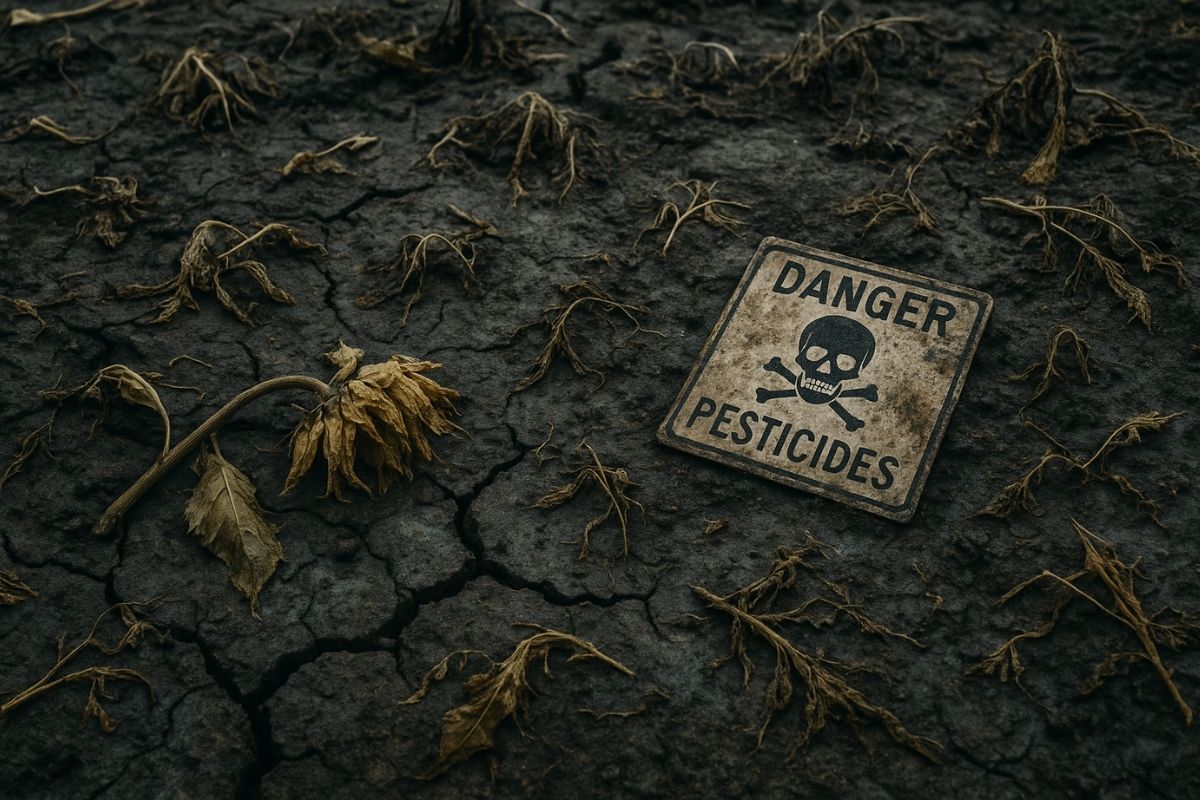
Why monocultures starve soils and ecosystems
When the same plant is grown over hundreds of thousands of hectares, natural diversity disappears. Pesticides and synthetic fertilizers in these monocultures are often overused to maintain yields. However, this destroys microbial life in the soil, depletes nutrients, and disrupts natural water cycles. Where once a multitude of insects and wild plants created rich habitats, erosion and degradation prevail. Biodiversity and soil fertility become victims of a system that prioritizes short-term yield gains over long-term ecosystem health.
Six corporations control what we eat
An oligopoly of just six agribusiness corporations now controls around three-quarters of the global market—from genetically engineered seeds to industrial meat production. These corporations profit twice: first they receive billions in subsidies, then they sell expensive solutions for the damage they themselves cause. Pesticide manufacturers market detox products, seed companies patent resistant varieties requiring ongoing fertilizer and pest control programs. Money thus changes hands twice in their coffers, while consumers and the environment foot the bill.
When so-called “cheap” food becomes a luxury
Supermarket prices reflect only a fraction of the true costs. Health economists estimate that annual expenditures for illnesses caused by pesticide poisoning, antibiotic resistance from factory farming, and growth promoter residues exceed USD 1.6 trillion—nearly three times the agricultural subsidies. These additional costs are ultimately borne by the public through higher healthcare contributions and social spending. The apparently inexpensive meal turns into a luxury for those who can afford it.

How entire regions get trapped in dumping
Subsidized agricultural exports systematically push local markets in Africa, Asia, and Latin America aside. Smallholder farmers who have grown grains, fruits, and vegetables for centuries cannot compete with trucks hauling US corn or EU wheat at a fraction of production cost. Studies estimate that nearly 500 million smallholders are directly affected and up to 4 billion people suffer indirect consequences. Soil fertility is lost, water cycles are disrupted, and pollinator populations collapse—leading to the downfall of entire agricultural systems.
When destruction forces people to flee
Lost livelihoods drive people from their fields to cities or abroad. In the EU, up to 500 000 migrants are registered annually as “economic refugees,” primarily caused by structural market distortions from agricultural subsidies. Host countries spend around EUR 94 billion per year on border security, initial reception, language training, and social benefits. These expenditures are costly and ineffective—they treat symptoms while destructive exports continue unchecked.

How politics cements the cycle
Rather than addressing root causes, many governments pursue a dual strategy: they continue subsidizing agricultural exports while erecting barriers and closing measures. Populist parties exploit the resulting fear of migration to demand more border security. This political instrumentalization of human suffering reinforces the vicious circles of destruction and symptom treatment, blocking any real reform.
Natural solutions over technical pipe dreams
There is no technological substitute that captures CO₂ and regenerates ecosystems as quickly and effectively as nature itself. The sensible way forward is to promote low-impact agriculture and immediately eliminate trade-distorting subsidies. Our rewilding cooperative concept converts industrial animal husbandry into extensive, animal-friendly grazing. This yields immediate CO₂ capture, restores soil fertility, and provides new economic opportunities for local communities.
Conclusion: Taking responsibility and stopping the perfect crime
The path out of the destructive cycle requires bold political decisions and individual commitment. We must:
- End export subsidies and promote fair trade.
- Expand regional, sustainable agriculture.
- Establish rewilding cooperatives to regenerate soils, biodiversity, and the atmosphere.
- Channel investments into local value chains in Africa and Asia to prevent migration.
“If you really want to make sure something gets done, just do it yourself.” Every positive Earthprint we make secures a real future for our “Earth nursery.” Become a Guardian of the Earth, support the Global Alliance for the Rights of Nature petition, and restore rights to our planet: https://www.rightsofmotherearth.com/what-we-do.