
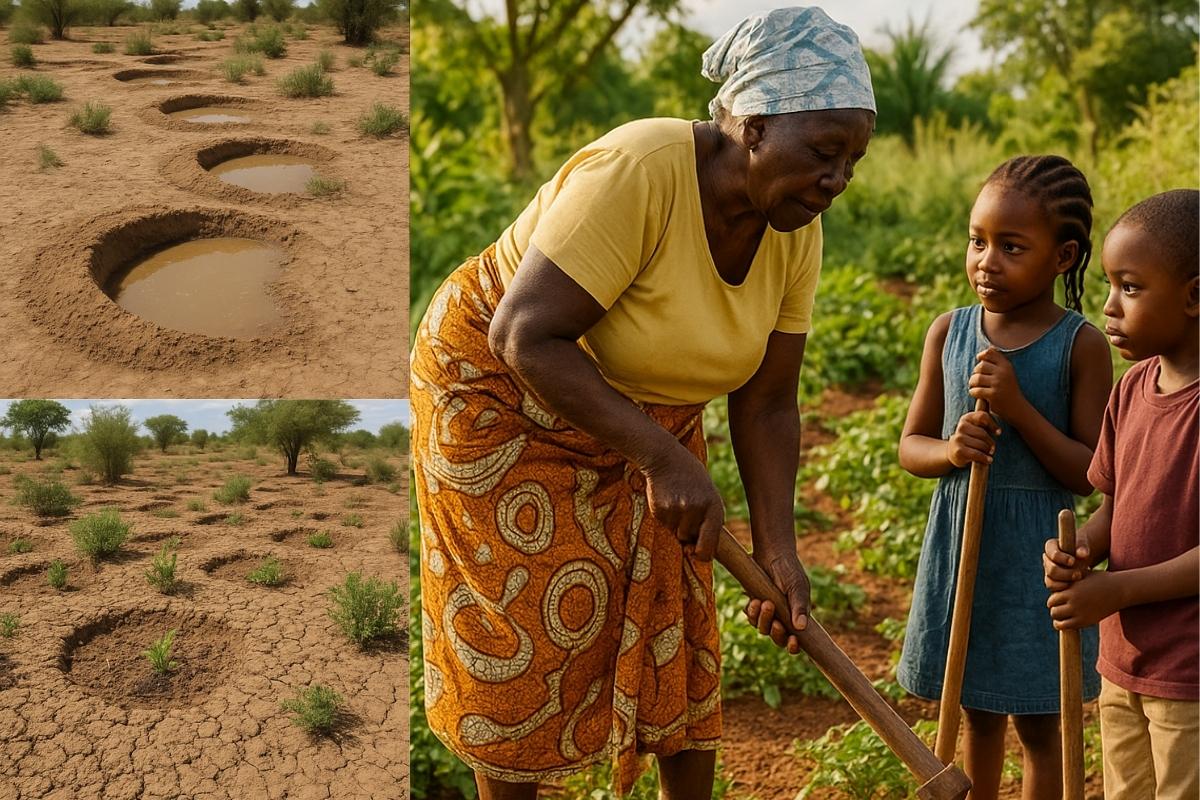
When War and Climate Change Collide: How Displaced People Turn Desert into Oasis
Dear readership,
in a world where political interests, outdated subsidy systems, and armed conflicts are displacing more and more people from their homes, a unique counterbalance is emerging on the edge of the Sahara: hundreds of thousands of displaced individuals are becoming the architects of restoration. From necessity and uprooting, a hopeful mosaic forms—from traditional techniques to visionary community projects and pragmatic solidarity. This article explains step by step how simple earth structures, collective will, and targeted policies transform deserts into flourishing landscapes and food security—and why we as Earth Guardians must act now.
Why Africa’s Restoration Concerns Us All
The Sahel is a climate change hotspot: soils are depleted, rainfall is scarce, and state and agricultural subsidies often flow to large agribusinesses rather than sustainable small-scale projects. Hundreds of thousands depend on food aid. But what if these very people could be the architects of a green revolution? Permaculture expert Andrew Millison has shown in two compelling video reports how this question is already being answered today:
• Inside Africa’s Food Forest Mega-Project in Niger documents how Half-Moons and Zai-Pits foster thousands of trees on 800 hectares and sustain people on regenerated land.
• How Refugees Are Greening the Edge of the Sahara illustrates how over one million Sudanese refugees in Chad receive land and, together with locals, green the desert’s edge.

“Redesigning Our Earthly Nursery” – The Vision of the Great Green Wall
The Great Green Wall is more than a tree-planting campaign: it spans 8,000 km across Africa, combining traditional water management with modern solidarity. Its goal is to build a green barrier against the Sahara, stabilize soils, recharge aquifers, and secure livelihoods. It’s not just about climate protection, but food sovereignty: restoring homelands so people can practice farming, livestock rearing, and permaculture gardening autonomously.
Storing Rain with Half-Moons and Zai-Pits
At the heart of every restoration are two simple yet highly effective methods:
Half-Moons: Semicircular earth embankments placed along contour lines slow down rainwater runoff, allowing it to infiltrate enriched depressions where organic matter transforms into humus, providing nutrients and moisture for young plants.
Zai-Pits: Small planting pits that capture sand and organic material, acting as “seed concentrators” that hold water longer and warm less, enabling crops like sorghum and young acacias to thrive even in compacted soils.
Both techniques are mobile, low-cost, and easy to learn, enabling communities to regenerate land without major investments.
First Green Shoots Within a Year
Permaculture expert Andrew Millison accompanied the World Food Programme (WFP) in Niger and documented how, just twelve months after installing Half-Moons, grasses and young trees sprouted. An eight-year-old field already boasts a dense tree canopy that lowers temperatures by up to eight degrees Celsius and halts soil erosion. Bird populations rise as they bring new seeds, naturally diversifying ecosystems.
Maradi Example: From Wasteland to 800-Hectare Food Forest
In the Maradi region, the largest WFP project to date covers 800 hectares. Thanks to Half-Moons and Zai-Pits, three million cubic meters of rainfall infiltrate annually, 15% of which recharges deep aquifers and raises the local water table. Communities establish garden plots that produce vegetables, fruits, and medicinal plants year-round. Food sovereignty increases, malnutrition decreases, and reliance on external aid is drastically reduced.

Chad: Refugees Receive Land and Forge Their Future
In eastern Chad, over one million Sudanese refugees live. Instead of confining them to camps, the government allocated 100,000 hectares of free land—half for refugees and half for host families—about one hectare per family to implement Half-Moons and Zai-Pits. Under the 2020 asylum law, they enjoy freedom of movement, labor and land rights, and access to education and health care. A pioneering model in Central Africa that redefines refugee integration.
From Garden to Socioeconomic Engine
The newly planted areas deliver not only ecological gains but social drivers:
• Community gardens produce food for local sale or exchange.
• Market revenues fund schooling and health services.
• Joint work between refugees and locals builds trust and reduces conflict risks.
This model breaks with traditional subsidies favoring large-scale operations and grows social capital alongside natural regeneration.
Why Our Support Is Crucial Now
Millison’s reports make clear: restoration works when people on the ground are empowered. Yet projects need:
• Sustained funding for seeds, tools, and training
• Policies that uphold land rights and asylum protections
• Redirecting subsidies from big agribusiness to community-led initiatives
Every hour invested, every euro, and every petition signature translates into greater resilience, more stored rainwater, and stable ecosystems.

The Earthprint as a Call to Action
Our Earthprint is the regenerative footprint we can leave together. Unlike carbon offsetting, it aims to heal biodiversity, strengthen local communities, and create positive feedback loops in global ecosystems. To ensure the planet’s recovery, we must support projects like the Great Green Wall and the refugee land initiative through donations, political advocacy, and targeted Earthprint actions.
Conclusion: From Humanitarian Crisis to Ecological Opportunity
Sahel restoration proves that people—even from refugee camps—can turn deserts into oases. Traditional techniques like Half-Moons and Zai-Pits, combined with innovative legal frameworks and pragmatic solidarity, generate food security, economic prospects, and ecological resilience. Now is our moment as Earth Guardians: sign the Global Alliance for the Rights of Nature petition, support permaculture workshops, and advocate for fair funding policies. Only then will adversity transform into rebirth—for people and our shared planet.
“The world would be so much better if we listened more to our common sense, took time for each other, and treated everything with respect: nature, animals, and ourselves.” – Francesco del Orbe