
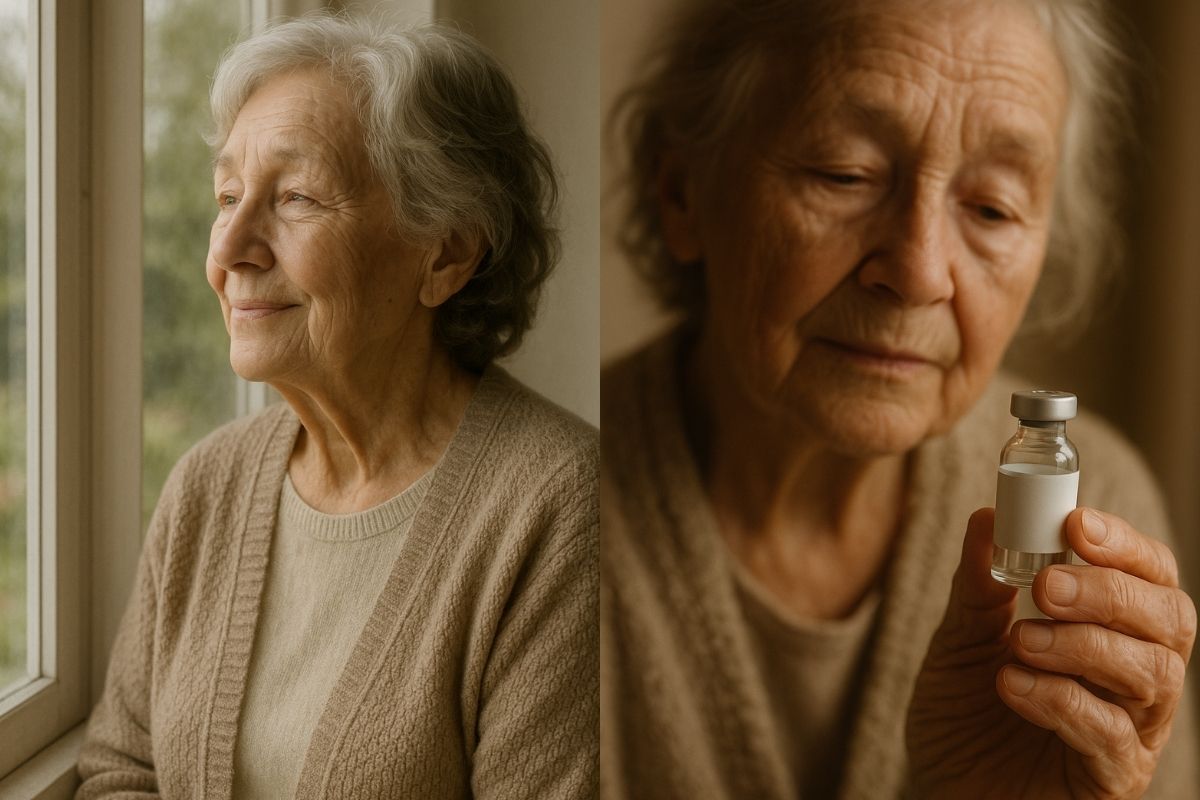
Why We Must Discuss Our Own End of Life
When people suffer unbearably with no hope of recovery, the question arises: Should everyone be allowed to decide when and how their life ends? This topic touches the deepest ethical, legal, and social principles. It concerns human dignity, personal freedom, and state responsibility. The 2020 ruling by Germany’s Federal Constitutional Court that recognized the right to self-determined death as part of general freedom of action makes clear: we face a conflict between constitutional law and practical reality that forces hundreds of thousands into painful suffering.
An Unused Right: When Authorities Deny Deadly Medication
Although the Constitutional Court ruled that any competent adult has the right to receive a lethal medication, the Federal Institute for Drugs and Medical Devices (BfArM) rejected all 223 applications by the end of 2021 without exception. The Federal Ministry of Health instructed BfArM in 2018 to generally refuse these requests. This gap leads to absurd scenarios: terminally ill people are forced to resort to painful methods or seek help from hard-to-access assisted dying organizations.

Self-Determination vs. Duty of Care: The Philosophical Debate
John Stuart Mill formulated the “Harm Principle”: no one should harm others – suicide harms no third party and therefore should remain a personal choice. Libertarian thinkers emphasize: My life belongs to me alone. In contrast stands state paternalism, which intervenes out of concern for vulnerable people, often violating human dignity.
When Humans Are Valued as Human Capital: The Economic Perspective
Studies show that suicide costs the U.S. economy $510 billion annually, £9.58 billion in the U.K., and €9.07 billion in the EU. Prevention programs like ED-SAFE achieve a cost-benefit ratio of roughly 1 : 1.7, while New Zealand’s MATES program reaches 1 : 4.42. Yet, people over 85 are deemed “less worthy of protection” because their productivity losses are considered lower.
Indigenous Worldviews Offer a Different Lens
In indigenous cultures, death is not solely an individual event but part of a spiritual cycle. Among the Ojibwe Elders, dying is a “Passing Over” into the realm of ancestors. This perspective highlights communal care and cultural continuity rather than individual autonomy.
Globally Between Liberalization and Prohibition
Only 4% of the world’s population has access to assisted dying. Full euthanasia legalization exists in a handful of countries; assisted suicide is permitted in a few more. Over 80% of countries prohibit assisted suicide for religious, cultural, or political reasons.

The Religious Paradox: Suicide Forbidden, Martyrdom Celebrated
In Islam, suicide is forbidden, yet extremist groups justify suicide bombings as “martyrdom.” The same act receives starkly different judgments – a situational ethics that dismisses individual autonomy.
Disempowering the System? Why Pragmatic Change Beats Revolution
Completely dismantling state structures is unrealistic. A five-phase reform plan is more feasible: legal challenges, political mobilization, technological infrastructure, economic incentives, and international collaboration.
Caring for the Earth: The Earthkeepers’ Message
As Earthkeepers, we support rewilding cooperatives to capture CO₂, foster biodiversity, and restore habitats. Just €0.09 per day is enough to leave a positive Earthprint.
Ending One’s Life with Dignity
Every person has the right to bodily autonomy, dignified accompaniment, and self-determined death. A true democracy must enable this right in practice, not just in theory.
“If you really want to ensure something gets done, just do it yourself!”
— Francesco del Orbe


