
Soil structure and its importance
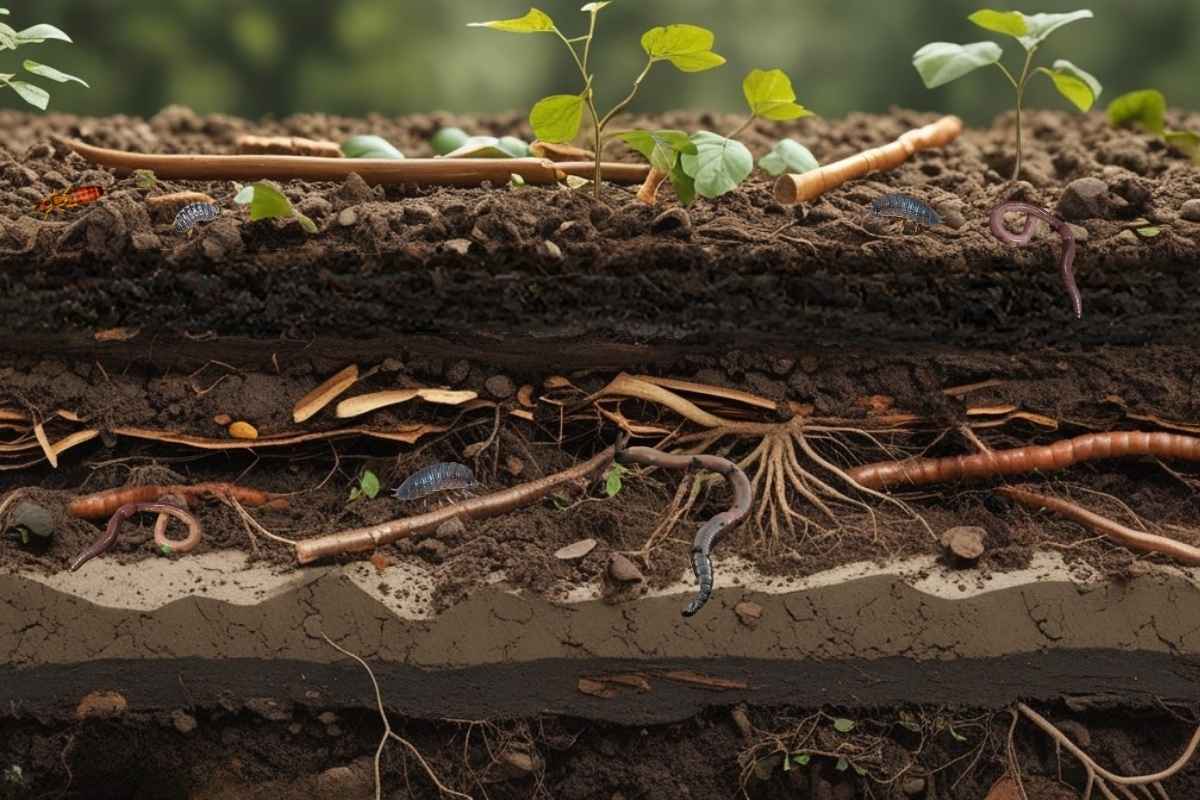
Imagine you are walking in the forest or the garden and take a closer look at the ground. What you see as ‘soil’ is actually a very special layer: the humus layer. It is located in the top 10 to 30 centimetres directly below the surface.
What is the humus layer?
The humus layer is the part of the soil that has a lot of humus in it. Humus is everything left behind by plants and animals after they die: fallen leaves, small twigs, dead roots, and even animal remains.
All of this is broken down by earthworms, beetles, woodlice, and loads of tiny microorganisms like bacteria and fungi, and turned into a dark, crumbly mass.
What happens in this layer?
Many exciting things happen in the top 30 cm –‘life beneath our feet’, so to speak:
-Decomposition: Everything that falls on the ground is eaten, broken down and decomposed by small and microscopic organisms. This takes a while, but ultimately results in humus.
-Nutrient factory: The necessary nutrients for plants are released in the humus layer. It’s like having a supermarket right under the roots –everything the plant needs is right there.
–Water reservoir: The crumbly structure of humus holds water like a sponge. This is especially important when it doesn’t rain and the plants get thirsty.
–Habitat: A handful of humus contains more living organisms than there are people on Earth. Earthworms dig tunnels and loosen the soil so that air and water can penetrate it more easily. Other animals and microorganisms ensure that everything functions properly.

Why is this important?
The humus layer is the most important part of the soil for plants, animals and us humans:
–Without humus, there would be no plants: Plants get their food and water from the humus layer. Without this layer, they would not be able to grow.
–Without humus, there would be no life: The many small organisms in the humus layer ensure that the soil remains healthy and does not become a hard, dead mass.
–Without humus, there is no climate protection: Humus stores large amounts of carbon and thereby helps to protect the climate
Simply put
A handful of healthy soil contains more organisms than there are people on Earth. Imagine the soil is like a cake:
The top 30 cm is the delicious, fluffy layer with lots of raisins and nuts –that’s the humus layer. Below that is the firmer part.
Just as a cake without raisins and nuts tastes boring; soil without humus would be poor and infertile.
What happens when the soil is devastated and why it should remain covered with vegetation
When soil becomes desolate –meaning it contains less and less humus and fewer and fewer plants grow –the following happens: the upper, important layers of soil dry out and are carried away by wind or rain. This is called erosion.

The soil loses its fertility.
It can no longer store water and offers hardly any habitat for animals and plants. Where there used to be green fields, barren, dry areas are now emerging, similar to a desert – this is referred to as desertification. That is why it is so important to keep the soil covered with vegetation and to protect it. A dense layer of vegetation holds the soil together, prevents it from being blown or washed away, and ensures that new humus is created.
Only so, the soil can stay fertile, store water, and remain the source of life for plants, animals, and us humans. So, keeping the land green and protected is the best way to keep the soil healthy and the environment alive.
Author: Francesco del Orbe


