
From inspiration to implementation
Our research into regenerative agriculture has led us to something great: Agroforestry at Grand Farm: a role model for sustainable agriculture.
Why agroforestry? A question of sustainability
Every year, an average of 5.6 tonnes of fertile soil per hectare is lost to water and wind erosion on cropland. The top layer of soil, which makes our soils so valuable, is carried away by heavy rain and wind. This is a real problem, because without this layer, the natural fertility of the soil drops dramatically. Experts warn that in just a few decades, many farmland areas may no longer be capable of producing enough food.
The solution: bringing trees and shrubs back to the fields!
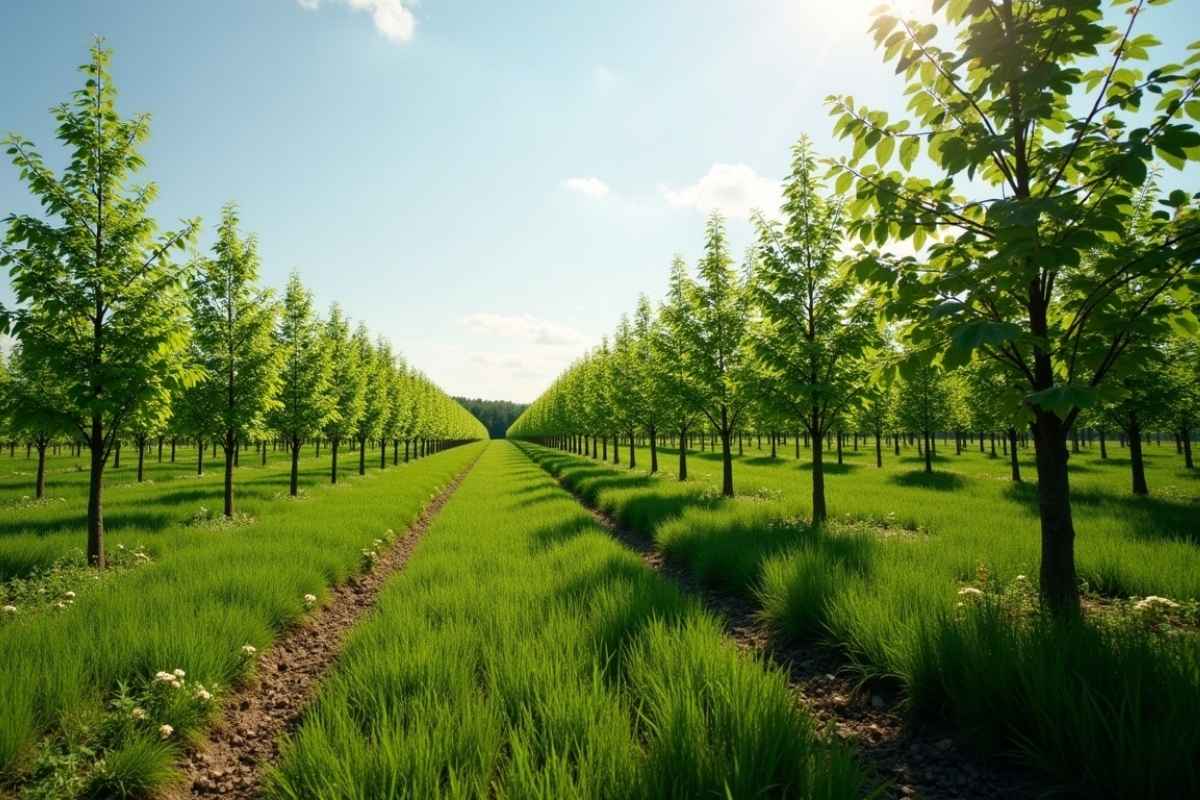
Grand Farm is relying on a tried-and-tested yet innovative solution: agroforestry systems. This involves planting hedges, trees and shrubs in and around the fields. This concept dates back to our ancestors, who surrounded their fields with hedges to protect the soil from erosion and promote biodiversity.
How does the practical side of things work at Grand Farm?
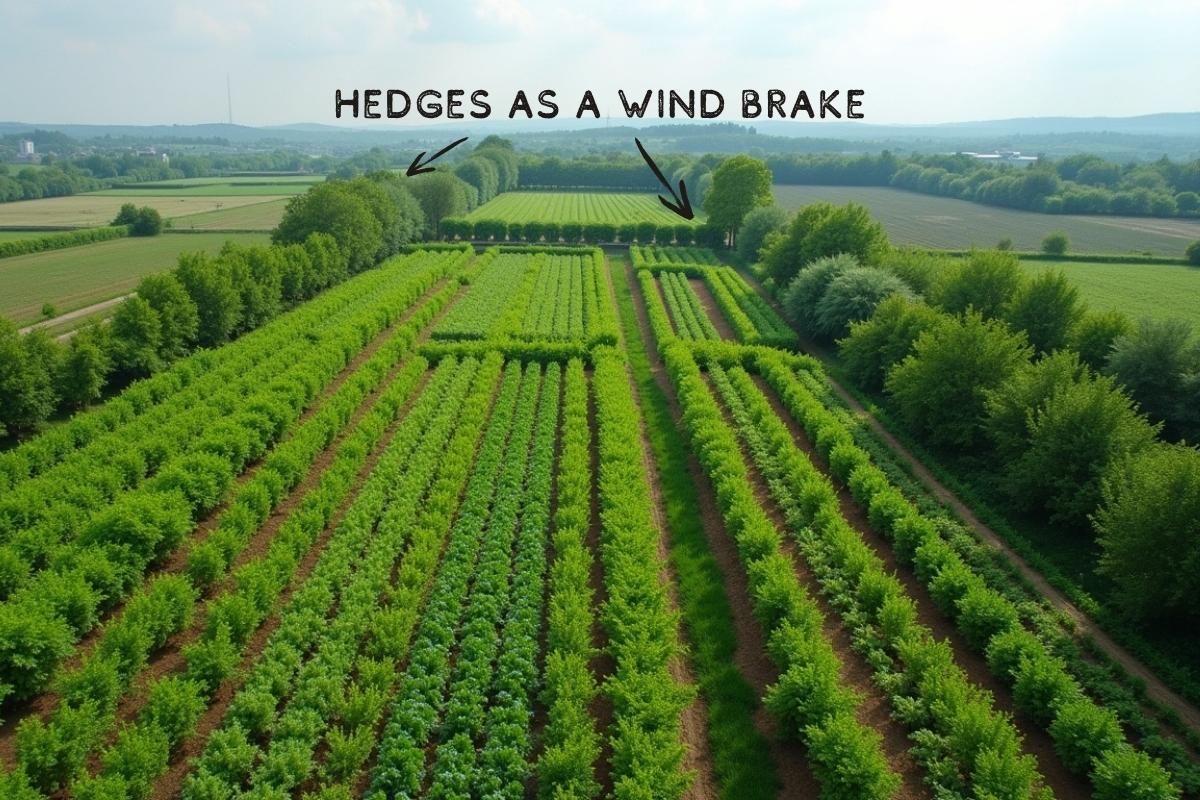
Hedge planting as natural wind brakes: Hedges of native trees and shrubs are planted as windbreaks. They significantly slow down the windand reduce soil erosion.
Boosting biodiversity: Hedges provide shelter and food for numerous animals. In this way, they contribute to a natural balance between pests and useful organisms.
Water management: The wind calming effect of the hedges also reduces evaporation on the surrounding areas. In addition, dew formation around the hedges increases, which in turn brings more water to the area.Economic benefits: The hedges consist largely of native woody plants, which can also be used commercially at a later date, for example through targeted timber harvesting.
Research and monitoring: Grand Farm works with various partners to analyse the effects of agroforestry systems on soil moisture, biodiversity and microclimate on a long-term basis.
Why is theswitch to agroforestry so important?
Traditional agriculture has reached its limits. The consequences: soil erosion, declining soil fertility, water scarcity and a decline in biodiversity. Agroforestry systems offer a number of advantages here:
Soil and erosion protection: the roots of the trees and shrubs stabilise the soil.
Increased soil fertility: The trees and shrubs enrich the soil with nutrients through leaf fall and root exudation.
Water retention and quality: The trees retain water in the soil andimprove water quality.
Climate protection: Agroforestry systems bind large amounts of CO₂ in the wood and soil.
Biodiversity: The diversity of plants and animals increases significantly.
Economic advantages: In addition to traditional yields, agroforestrysystems offer additional sources of income.
Adaptation to climate change: The systems are more resistant to extreme weather events.
Fresopolis is inspired – and is already successfully implementing agroforestry
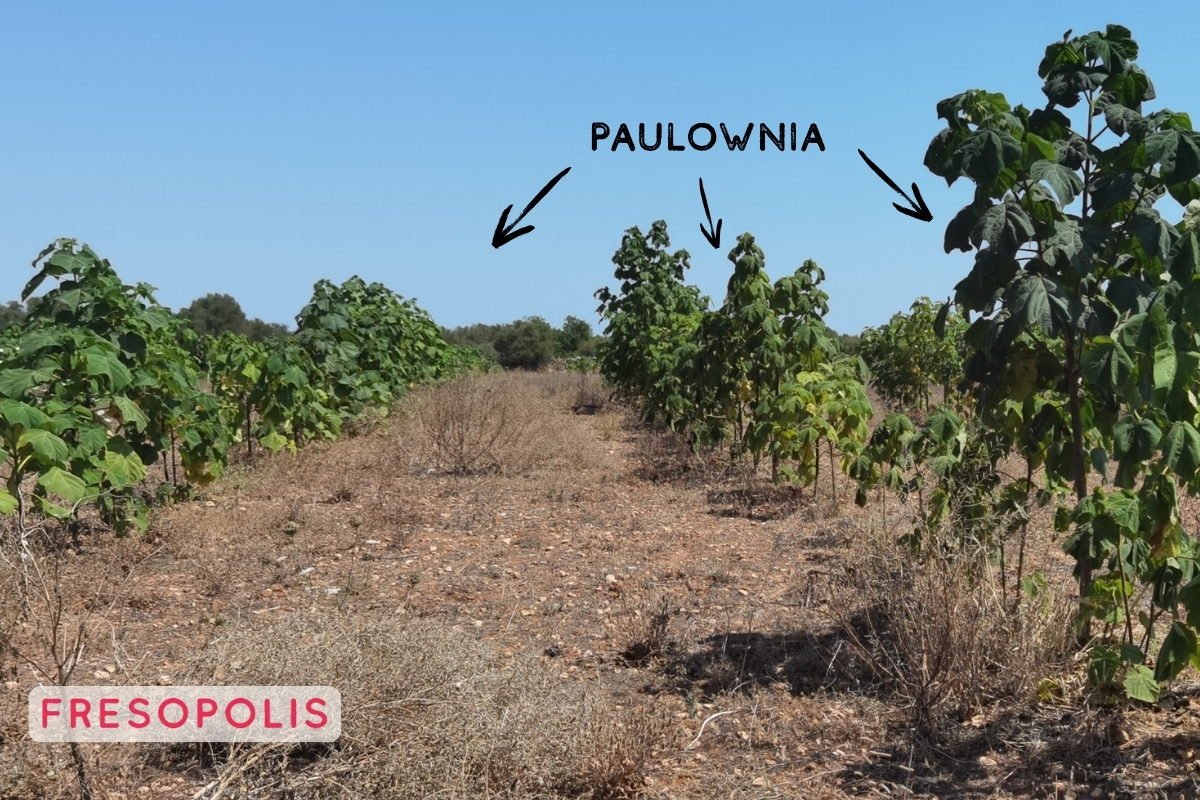
50% of our land was completely dead and unsuitable for agriculture.
We are enthusiastic about Grand Farm’s approach and commitment and have been inspired by it. We have been implementing agroforestry systems on our land since 2024: Last year, we planted a total of 2,500 trees, taking an important step towards sustainable agriculture. The previously barren areas are once again becoming an important part of the ecosystem
Our motivation:
We are delighted that previously empty spaces are now coming back to life. The trees bind huge amounts of CO₂ and actively contribute to climate protection. At the same time, we are promoting biodiversity and creating new habitats for insects, birds and small mammals.
Prospects:Starting next year, we will start the first animal feed cultivation test on these plots. This will allow us to test how agroforestry systems can be combined with the production of high-quality animal feed -another way of farming sustainably and economically at the same time.
Conclusion: Agroforestry is the agriculture of the future.Grand Farm’s approach shows how agriculture can be made sustainable again. At Fresopolis, we are also convinced that agroforestry is not a luxury, but a necessity -for a future worth living on fertile soils.
Author: Francesco del Orbe


