
What are the consequences and who does it affect?
What is erosion?
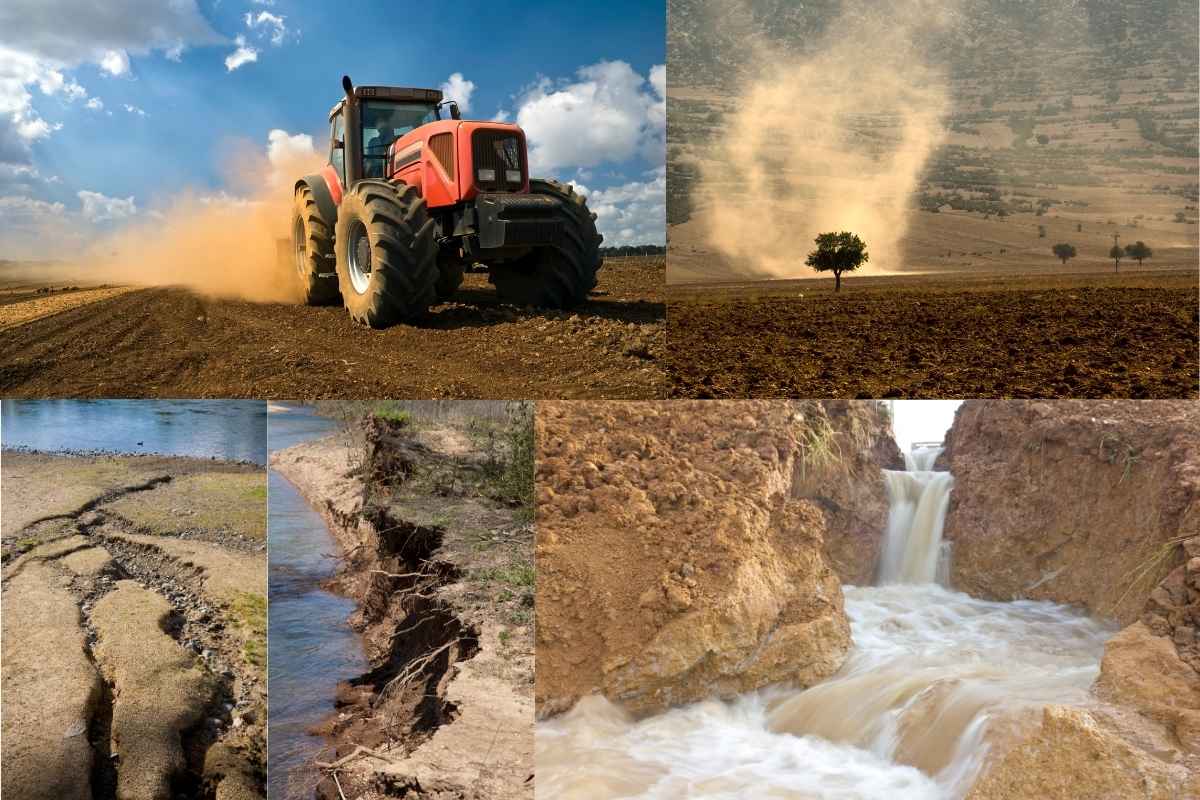
Erosion means that soil, sand and even stones are worn away by water, wind or ice and transported to another location.
Wind erosion:
Wind erosion refers to the removal, transport and deposition of soil material by the force of the wind. Particularly fine dust particles even make it across the Atlantic: every year, around 182 million tonnes of dust from the Sahara are transported to South America and the Caribbean –a distance of around 2,500 to 4,000 kilometres.
In exceptional cases, the fine particles can travel even further and remain in the atmosphere for several months. Wind erosion is facilitated by high wind speeds, dry and fine-grained soils, and little or no soil cover.
Soil erosion caused by water:
Soil erosion caused by water, is the process where soil particles are loosened from their original spot, carried away, and deposited somewhere else because of rain and running water. First, raindrops hitting the ground destroy the soil structure (known as the splash effect), loosening fine particles. If the water can no longer seep into the ground, it flows off the surface, carrying the loosened soil particles with it. This results in the loss of the fertile topsoil layer, sludge formation, gutter or trench erosion, and damage to water bodies and infrastructure.
This can happen slowly, for example when a river gradually erodes its banks over many years, or suddenly, for example during a flood.
How does erosion occur?
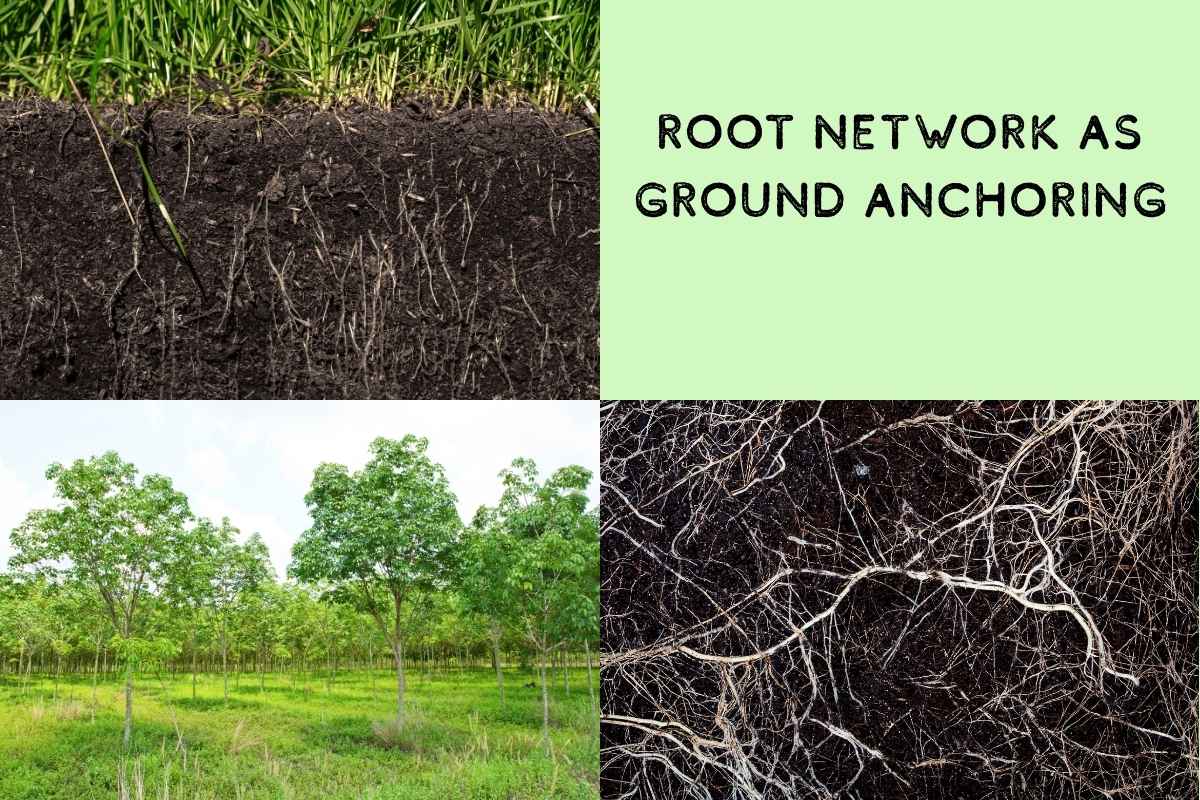
Erosion occurs when the soil is no longer well protected – for example, because there are no plants with extensive root systems.
Root systems hold the soil in place by acting like a natural net. They penetrate the soil and connect the individual soil particles to each other. This stabilises the soil and promotes waterabsorption. This stabilises the soil and promotes water absorption. Agriculture, drought or heat, break up and destroy this natural network that served as a ‘soil anchor’.
The example of Spain: erosion and its catastrophic consequences
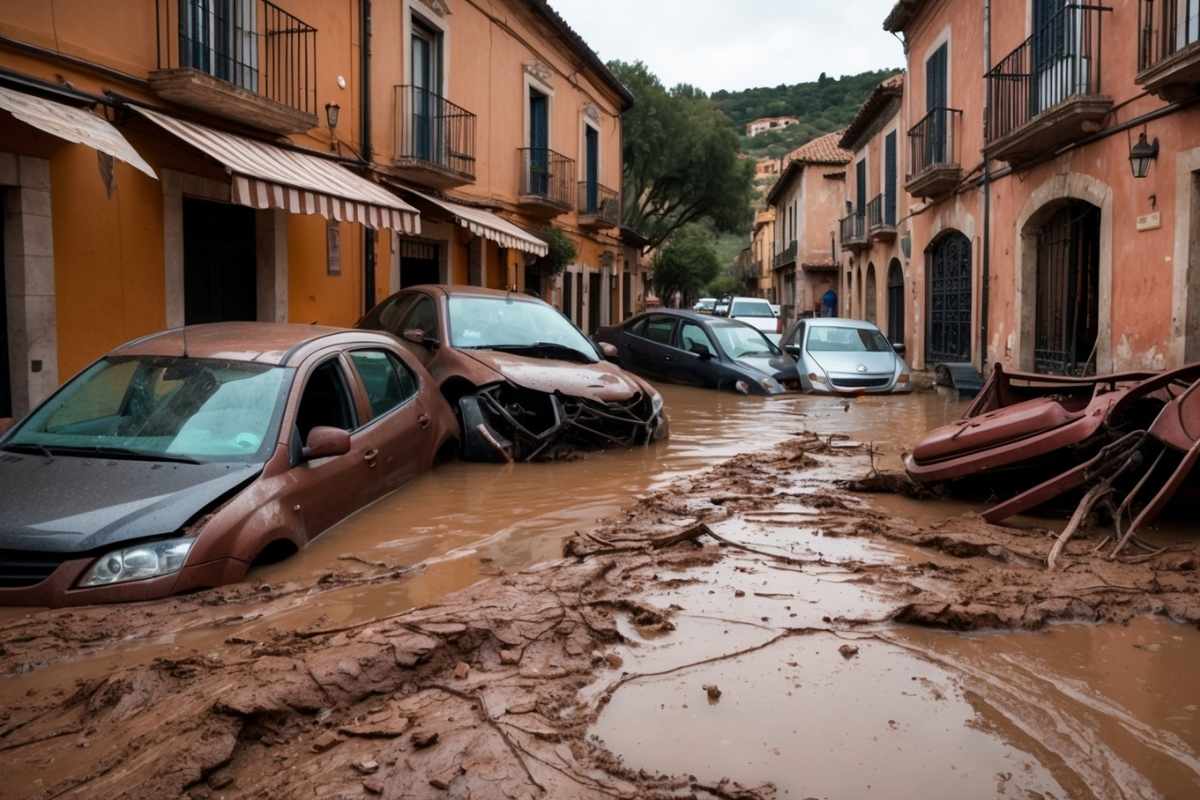
At the end of October 2024, Spain experienced one of the worst floods in its history. Valencia, Andalusia and Murcia were particularly affected. Within a few hours, up to 422 litres of rain per square metre fell in some places – as much as normally falls in an entire year!
What were the consequences?Over 230 people died, many were injured or went missing.
More than 60,000 homes and 115,000 cars were destroyed.Roads, bridges and fields were devastated by the floods and mudslides.
In many places, people were stranded on rooftops and had to be rescued by helicopters.Why was the erosion so severe?
In Spain, the soil in many regions is already very susceptible to erosion due to drought, intensive agriculture and a lack of vegetation.
The drought often makes the soil as hardas concrete and unable to absorb water. When heavy rain suddenly falls, the water flows off the surface and carries the soil with it –that’s erosion in action!
The floods washed not only soil but also mud, stones and rubbish through the streets and fields. What remained were destroyed fields, muddy houses and unusable land.
To repair this, these areas must be restored to their natural state!

|
Why??? – It’s simple!!! The water can no longer seep in – because the soil has become a closed “concrete layer”! |
The slowly advancing consequences of erosion in Spain:
- Soil loss: Fertile soil is washed away or carried off by the wind, fields become unusable, crops fail.
- Desertification: As more and more fertile soil is lost, the desert can expand. Spain loses an average of 1.4 million tonnes of soil every day due to erosion, which promotes the spread of desert-like areas.
- Damage to infrastructure: Roads, bridges and houses are washed away and can collapse.
- More flooding: Without protective plants and healthy soil, water can no longer seep away. After a drought, the soil is often as hard as concrete, so when heavy rain suddenly falls, the water flows off the surface, carrying soil, stones and rubbish with it, causing flooding.
This is erosion in action! What remains, are destroyed fields, muddy houses and unusable farmland.
What can be done about it?
- Protect the soil: preserve plants, hedges and forests so that the roots hold the soil in place.
- Do not leave the soil bare: do not leave fields empty after harvesting, but grow catch crops.
- Less intensive agriculture: less ploughing, more humus build-up so that the soilcan store water.
- Drain water in a targeted manner: create ditches, dams and terraces so that the water does not wash everything away at once.
Summary:
Erosion is a huge problem worldwide –especially when heavy rain suddenly falls after a long drought. This washes away the soil, destroys fields and causes extensive damage. The example of Spain shows how important it is to protect the soil so that such disasters do not become even worse. Worldwide, more than 30% of agricultural land has already been devastated and fallen victim to erosion.
Important:
Spain is just one example of many countries facing this problem. All over the world, healthy soil is the best protection against erosion, flooding and desertification!
It is high time to stop this. Our ‘Guardians of the Earth Programme’, which will soon be online, will show how this can be done and how everyone can contribute. Stay tuned. You can find all the information here.
Author: Francesco del Orbe


