
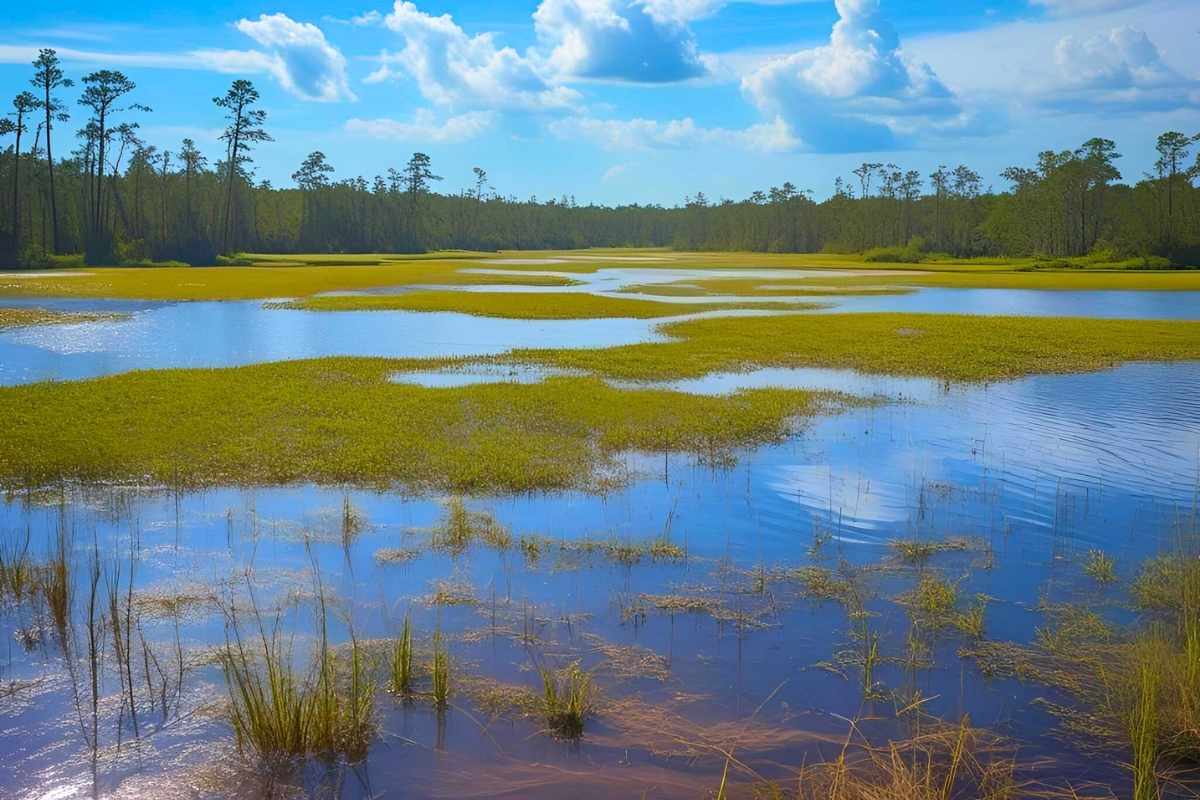
– Why It’s Crucial for the Global Carbon Balance
On land, there are various natural CO₂ storage systems
CO₂ Storage in Soils:
Agricultural soils can store 0.56–1.15 tons of carbon per hectare/year with improved management, which equates to 0.9–1.85 billion t C/year globally.
Grassland soils can store up to 440 t CO₂/ha, while drained peat soils emit ~20 t CO₂/ha/year due to decomposition.
CO₂ Storage in Peatlands:
Natural peatlands store 22.6–66.0 kg C/m² (equivalent to 226–660 t C/ha) – significantly more than aboveground forest biomass.
Intact peatlands are therefore more efficient long-term carbon sinks than most forest ecosystems.
Comparison with Forests:
Rainforests:
Tropical rainforests store 300–1,700 t CO₂/ha aboveground, but due to rapid decomposition, soil carbon is relatively low.
Their main role is rapid CO₂ uptake through fast plant growth.
Temperate Forests:
Trees store carbon in their biomass (e.g., 21 t CO₂/ha/year in pine plantations), while forest soils can hold up to 50% of total carbon.
European forest soils store an average of 106 t C/ha.
Structure of an Ideal Soil
A healthy soil consists of:
1. Soil horizons:
O horizon (organic): Leaf litter and decomposed biomass
A horizon (topsoil): Roughly 5% organic matter, 45% minerals (sand/silt/clay), and 50% pore space
B horizon (subsoil): Enriched with clay and minerals
C horizon (parent rock): Weathered bedrock materials
2. Properties:
Good aeration and water-holding capacity
Aggregate structure of mineral-organic complexes
Soil Organisms
Biodiversity:
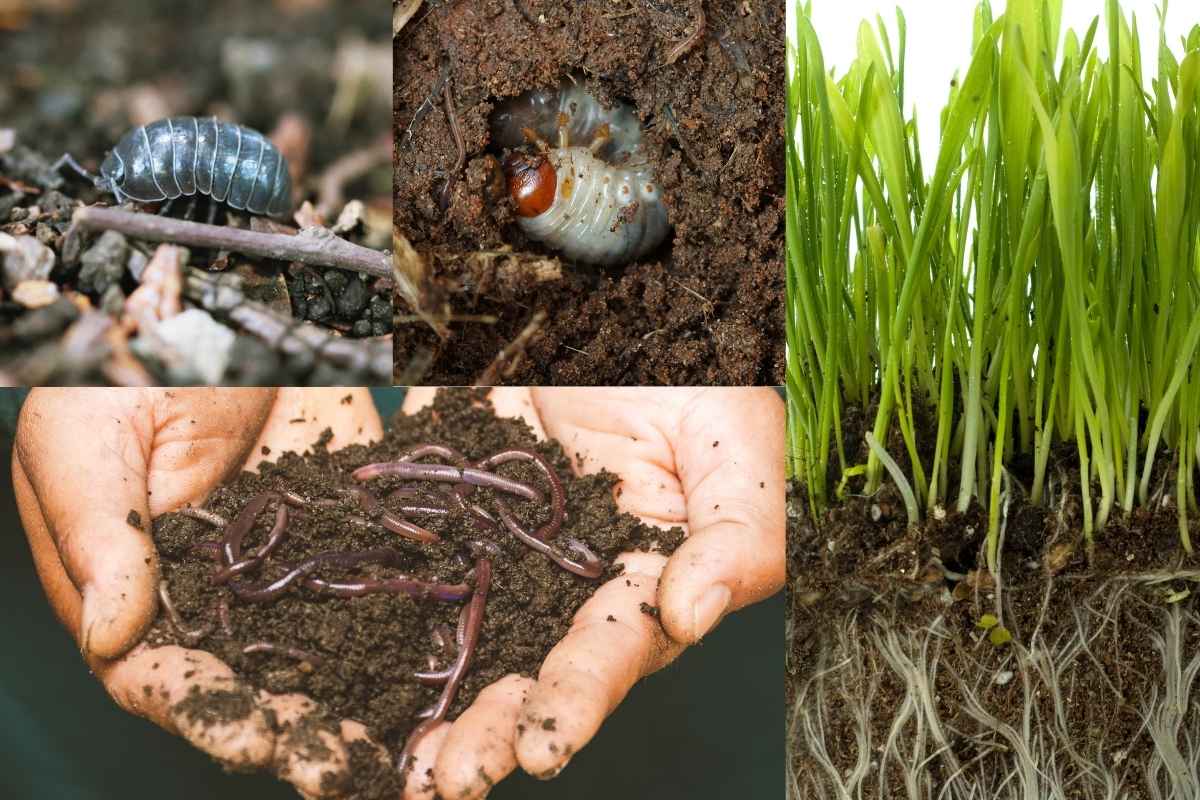
Soils host two-thirds of all known species, including 90% of all fungi and 85% of all plant species.
Depth Distribution:
0–30 cm (O/A horizons): Highest biological activity – earthworms, springtails, bacteria, and mycorrhizae
30–100 cm (B horizon): Fewer organisms – mainly deep-rooted fungi and microbes
Over 100 cm: Mainly chemolithotrophic bacteria in rock fissures
Abundance:
Fertile soils contain up to 1 billion organisms per m² (≈10¹³/ha), including:
Microorganisms: Bacteria, fungi, algae
Mesofauna: Mites, nematodes
Macrofauna: Earthworms, beetle larvae
Conclusion
Peatlands and forest soils are essential carbon sinks, with peatlands storing the greatest long-term carbon amounts per hectare.
The ideal soil combines rich organic matter, mineral diversity, and stable layering, providing a habitat for trillions of organisms.
Their interaction ensures carbon storage, soil fertility, and biodiversity.
Author: Francesco del Orbe 🌍


