
Why This Topic Concerns Us All
Dear reader, you might know the saying: “If you really want to make sure something gets done, just do it yourself!” In a world where the climate crisis, urbanization, and social tensions increasingly impact our lives, we all face the question: Is there really a “right” model for sustainable, happy living—and what does it look like? The movement surrounding Paris, the 15-minute city, the revival of rural areas, and the Earthkeepers initiative provide answers that are more than just slogans: they are exactly what our “Kinderzimmer Erde” (“children’s room Earth”) needs now.
Paris as a Symbol of Urban Change
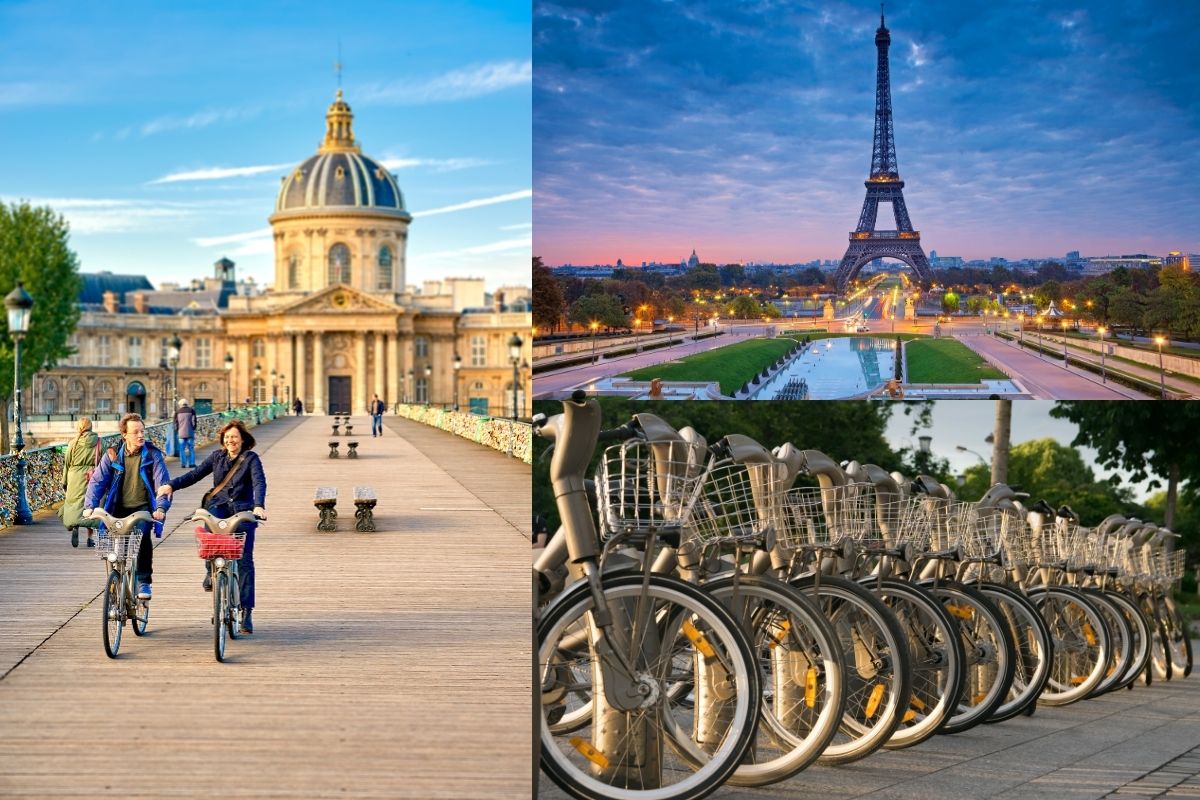
France’s capital, Paris, has undergone a radical ecological and social transformation under Anne Hidalgo since 2014. The results are measurable and visible: nitrogen dioxide dropped by 50%, particulate matter by 55%, and overall air pollution by 40%. Over 700 streets are now car-free, and after a 1.4 billion euro investment, the Seine is officially open for swimming again for the first time in 100 years. New parks, 170,000 extra trees, and 800 “cool islands” help mitigate heat waves and improve city living.

What makes Paris special? The city relies on citizen participation rather than top-down politics—referenda on e-scooters, SUV parking fees, or car-free zones legitimize even controversial projects. Anne Hidalgo stands in a tradition of transformation: her migrant story, inspiration from Bertrand Delanoë, and scientific foundation from Carlos Moreno’s 15-minute city concept make Paris a pioneer of participative, green urbanism.
The 15-Minute City: Life Within Reach
The 15-minute city is actually a simple idea: everyone should be able to reach all daily necessities—work, shopping, healthcare, leisure, education—within 15 minutes on foot or by bike. Why? Because it saves time, reduces stress, makes cars unnecessary, and benefits both climate and health. Cities that use this model show: per capita CO₂ emissions are 16% below rural values, and productivity increases (for instance, by billions in London thanks to better infrastructure and aggregated job markets).
But there are downsides: housing costs explode, gentrification displaces traditional residents, and the denser a city gets, the higher the absolute crime rate and deaths from summer heat. The key is balance—and open discussion of advantages and disadvantages.
Who Is Primarily Responsible for CO₂?
An often-overlooked point: blaming the individual and their lifestyle for the climate crisis (“Eat less meat, ride a bike, and everything will be fine”) ignores the facts. In reality: state-owned enterprises were responsible for 52% of global CO₂ emissions in 2023. The five largest private oil companies (ExxonMobil, Shell, BP, Chevron, TotalEnergies) account for only 4.9%, and Saudi Aramco alone emits more CO₂ than many countries combined. Your bike ride or skipping a steak changes little globally if enormous quantities of CO₂ keep flowing unchecked.
Still, there are effective ways out of the individual trap. Earthkeepers can leave a positive “Earthprint”—that is, absorb more CO₂ than they produce with every action. This is possible, for example, by supporting rewilding and regenerative farming projects that raise animals humanely, improve soils, and market locally. Even meat-eaters can “save the world”—provided their meat comes from extensive, closed-cycle grazing instead of industrial livestock operations.
Rural Areas: Why They Remain Indispensable
Europe has lost over 2,900 villages in just a few years. Italy counts 6,000 ghost towns, and countless houses are sold for a euro. This is not just a matter of folklore but an economic and ecological catastrophe: each abandoned village loses not only doctors, schools, and shops but also local knowledge, soil care, and biodiversity contributions. In rural regions, infrastructure is often 2 to 10 times more expensive per person than in cities (where it’s shared).
Agriculture provides 90% of all calories and 80% of protein consumed worldwide. Regenerating soils, biodiversity, and water management only works when people actually live and work locally—not with robots or monocultures. Crop rotation, mixed farming, and extensive grazing form the backbone of resilient, future nutrition and make an active contribution to climate protection.

Blue Zones and Remote Work as a Model for the Good Life in the Countryside
What’s so special about the “Blue Zones”—those places where people live longest and healthiest? A combination of plant-based diets, daily exercise, strong intergenerational social networks, and holistic rhythms of life. All this is perfectly possible in well-structured rural communities: those who work in their gardens, eat fresh fruit and vegetables, and span three generations under one roof live healthier, more relaxed, and longer lives.
Thanks to digitalization and remote work, modern villages are no relic. With high-speed internet, co-working spaces, and clever infrastructure, professionals can work peacefully without big-city noise—and breathe freely right outside their door.
Hybrid Models and the Future Between Worlds
Neither city nor country “wins” the future on its own: the best models arise in combination. Small towns of 5,000–15,000 people, smart villages with co-working spaces, commuting communities between home office and city life—all this builds a contemporary hybrid. Local crafts, tourism, renewable energy, and education build its economic base.
The Earthkeepers’ Idea: How to Make Your Earthprint Matter
We Earthkeepers—as part of the “Global Alliance for the Rights of Nature”—stand for planet protection, biodiversity, and responsibility beyond technocratic solutions. The petition for the official recognition of “Kinderzimmer Erde” (“children’s room Earth”) reminds us to treat our world as our own home—not as a resource.
Our slogans (“Act yourself. Change together.”, “From Destruction to Creation.”) are a call to action: leave a concrete, positive mark.
The world would be much better if we listened more to our common sense, took more time for each other, and treated everything with respect—nature, animals, and ourselves. (Francesco del Orbe)
Summary: It All Starts with Responsibility
The great city-country debate is not black and white. Local and global responsibility, sustainable farming, participatory democracy, flexible digital work, and intergenerational care can create new quality of life and ecological meaning in both urban and rural spaces. This article shows: change is possible—but only with an honest look at the facts, strategic collaboration, and the courage to take responsibility for our “Kinderzimmer Erde.”
If you really want to make sure something gets done, do it yourself!
Together, we can create a planet worth living on—today and for all generations to come.