
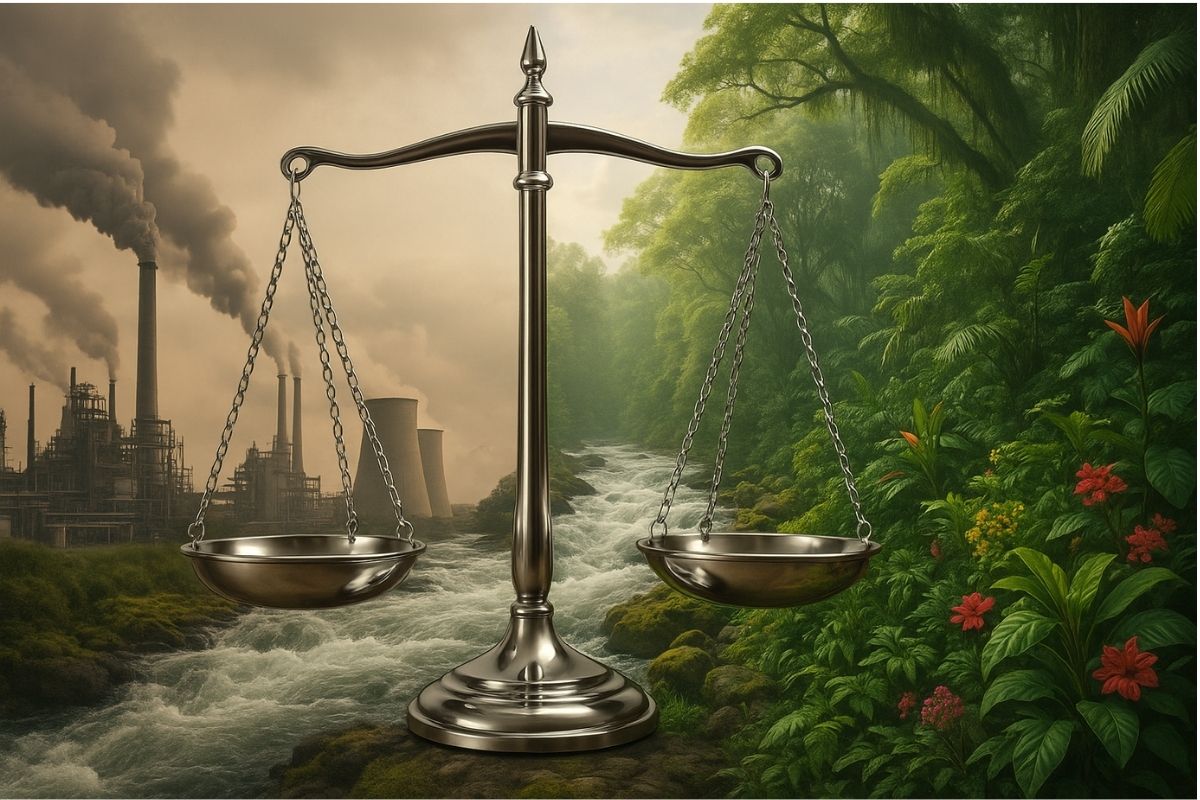
Why Does Nature Need New Rights? – The Heart of the Problem
For centuries, our legal system has been shaped by the idea that nature is the object of human use and disposition. The forest belongs to someone, as does the field, the river, or the animal in the pasture – protected as property but not as a legal entity. Nature is protected as long as it benefits humans, and violations of environmental regulations are often just administrative offenses or minor crimes. The result: mass extinction, climate crisis, destruction of entire ecosystems on an unprecedented scale.
But what if nature could act as a subject of rights? If, represented by people, associations, or authorities, it could independently claim and defend rights—for example, the right to integrity, regeneration, and survival? That is the goal of the rights-of-nature movement and the growing worldwide network of initiatives and projects.
From Property to Its Own Rights – The Paradigm Shift
Recognizing nature as a legal subject means a radical change of perspective. Instead of being seen as a mere “resource,” nature should legally be on the same level as other legal entities—such as individuals, companies, or organizations. Property rights would henceforth be subordinate or at least equal to the protection of nature’s own rights. As a result, it would no longer be just about what humans use, but also about what nature claims for itself—habitats, integrity, or its own development would have to be weighed in law.
A vivid example is the Whanganui River in New Zealand, which has been recognized as a legal person since 2017. It is represented by human guardians (some state, some indigenous) in the spirit of the river. This means that if the river is harmed, legal action can be taken in its name and protection demanded—regardless of its benefit to humans.

Pioneers and Models: Ecuador, Bolivia, and the Indigenous Perspective
There are now over 495 rights-of-nature initiatives in more than 40 countries worldwide. The constitutions of Ecuador and Bolivia are particularly influential. Since 2008, Article 71 of Ecuador’s constitution states: “Nature is subject to those rights recognized by the constitution.” This is not just legal poetry—it has been used to protect rivers and forests from mining or deforestation.
The indigenous philosophy is fundamental: the principle of “Sumak Kawsay” (good life) and the Seven Generations model demand that every decision must benefit at least seven future generations, approximately a 200-year horizon. Humans are part of a greater whole—obliged to balance, respect, and mutual protection. This principle is increasingly used in international debates as a benchmark and measure of sustainability.
The key rights of nature discussed worldwide—based on experiences from Ecuador, Bolivia, local U.S. laws, and scientific concepts—can be summarized and explained as follows: The implementation of such rights takes many forms—and is often surprisingly pragmatic. Unlike UN summits or constitutional amendments that can take decades, so-called citizens’ assemblies in several countries have significantly accelerated effectiveness. In France, the assembly led to 75% implementation, in Ireland to numerous new laws, and in the UK and Austria to progressive climate targets. In this format, randomly selected citizens (not politicians!) come together, listen to experts, discuss solutions, and make majority decisions. These recommendations create enormous political pressure—examples from France and Ireland show that governments then actually take action. Importantly, citizens’ assemblies can also establish the indigenous Seven Generations perspective as a guiding principle, since many “ordinary people” instinctively think across generations. What does this actually achieve? Some experiences and models from practice: These examples demonstrate: When nature has rights, entirely new solutions emerge—such as citizen initiatives against major industrial projects, municipalities acting as stewards of their resources, or legal standing for NGOs previously denied a legal role. How could such a change look in Germany and the EU? Currently, nature is still primarily the “object” of state protection. But calls for incorporating nature’s rights into the constitution are growing louder. German federal states like Bavaria have already started initiatives aiming for clear rights, the ability to sue, and mandatory restoration. It is essential that every solution maintains the balance with existing property and freedom rights—just as workers’ and consumer protection brought new balances in the past. By being implemented primarily as sustainable property rights, the rights of nature become part of a social-ecological rule of law. One consistent challenge: Where is the boundary between legitimate use of resources (e.g., farming) and interventions that violate the right to existence? The legal system faces the task of developing objective standards (e.g., scientifically based limits or holistic impact assessments) and defending them. A common objection is that rights of nature excessively restrict individual freedom. But the opposite approach has proven a dead end—property rights that ignore the environment ultimately destroy human freedom as well. If designed wisely, nature’s own rights enable a new kind of freedom: the freedom to live in a healthy environment, to use resources without destroying the foundation of future generations, and to balance personal development and collective security for the future. The international debate and many practical examples show that rights of nature are not a utopian ideal, but a powerful instrument for tackling ecological, social, and economic challenges. They unite indigenous wisdom—thinking in generations—with modern legal concepts and the citizens’ will for genuine responsibility. The task of our time is to establish these rights practically, comprehensibly, long-lasting and effective at every level—through political initiatives, legislation, citizens’ assemblies, and the committed engagement of all those who have realized that our “Earth nursery” deserves responsibility and respect. Now is our time as Earth stewards. Let’s protect the Earth, give her rights—enjoy responsibly, preserve our common “children’s room Earth” together and sign the petition! Our motto: “The world would be so much better if we listened to our common sense, took time for each other and treated everything with respect—nature, the animals and ourselves.” (Francesco del Orbe)
What Rights Does Nature Actually Include?
The Path to Implementation: Citizens’ Assemblies Instead of UN Summits
Practical Examples: The Law Becomes Tangible

Opportunities and Limits in the German and European Context
Why Rights of Nature Are No Contradiction to Freedom
Conclusion: “If you really want to make sure something happens, just do it yourself!”