
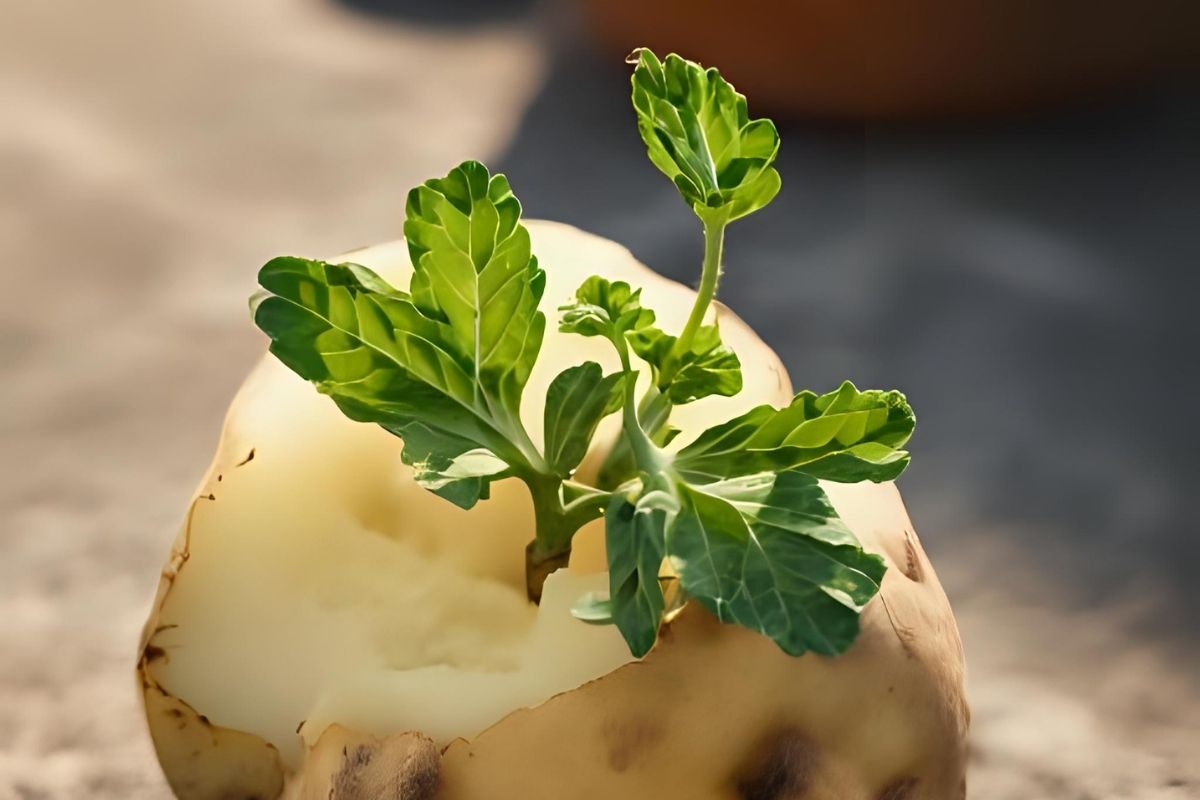
– A Simple Method to Support Plant Propagation
The potato is often used as a natural rooting aid for plant cuttings. The cutting is placed into a pre-drilled hole in the potato, which acts as a water reservoir and nutrient supplier. The tuber provides consistent moisture and contains growth-promoting enzymes and starch, supporting the initial phase of root development.
Advantages of Using a Potato for Rooting
- Moisture: The potato keeps the cutting consistently moist without overwatering, reducing the risk of rot.
- Nutrients and Enzymes: It provides starch and enzymes that can stimulate root growth.
- Simple Application: A very easy method, ideal for people who forget to water regularly, as it maintains moisture without frequent care.
How the Method Works
- Prepare the potato: Cut a raw potato in half lengthwise or keep it whole, and drill a hole halfway through.
- Prepare the cutting: Cut a 10 cm long stem cutting and remove the lower leaves if necessary.
- Insert the cutting: Place the cutting firmly into the hole in the potato.
- Planting: Plant the potato with the cutting into soil or a pot, ensuring that at least one-third of the cutting remains above the surface.
- Care: Water thoroughly and place in a warm, not too sunny location.
Effectiveness and Limitations
The potato mainly serves as a practical water source and provides a favorable microclimate for the first weeks of root formation. However, it does not replace classic rooting hormones like willow water or cinnamon, which stimulate rooting on a hormonal level. Compared to propagation in general seed-starting soil, the potato method usually doesn’t result in faster or better root development, but is still a useful alternative for beginners or challenging conditions.
Conclusion
The potato is a simple and natural rooting helper that supplies cuttings with moisture and nutrients.
It’s especially useful for plants like roses, rhododendrons, and others that are difficult to root. For optimal growth, it’s best to transplant into proper soil once roots have developed.
Author: Francesco del Orbe 🌍


