
Erosion, Saharan Dust, and What’s Really Behind It
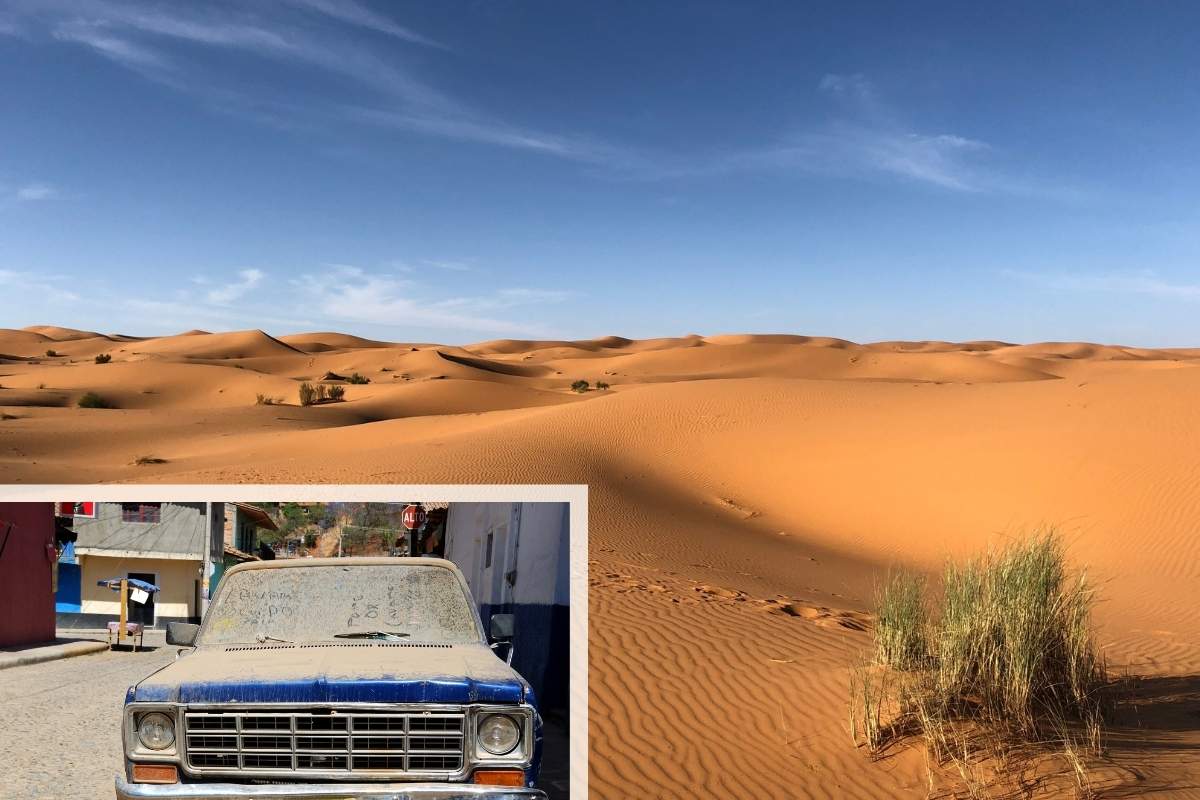
Erosion is a natural process in which water, wind, or ice removes rock and soil. In arid regions like the Sahara, wind erosion is a major force: strong winds lift fine sand and dust particles from the surface and swirl them into the air. The Sahara is one of the largest sources of mineral dust in the world.
How does Saharan dust form and travel?
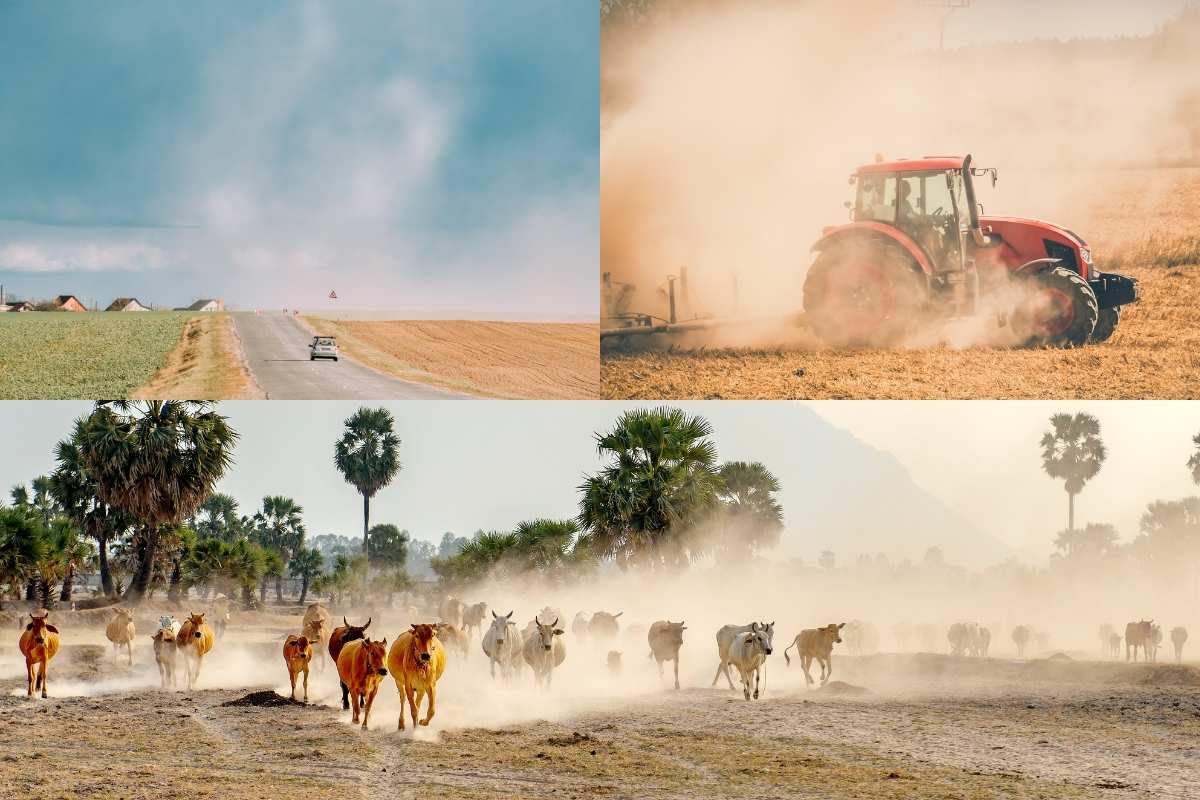
- Formation: Heat, wind, and thermal turbulence lift large quantities of dust into the air. Human activities like agriculture or overgrazing can intensify erosion.
- Transport: Dust particles are carried high by strong winds – such as the trade winds – and travel thousands of kilometers across the Atlantic to South America or Europe.
- Deposition: When dust meets rain, it falls as “blood rain.” Otherwise, it remains suspended in the air, causing hazy skies and milky sunsets.
What happens when Saharan dust is in the air?
- Atmospheric effects: Saharan dust scatters sunlight, creating milky skies and spectacular sunrises and sunsets.
- Environment and climate: The dust contains valuable minerals like phosphorus, calcium, magnesium, and iron. These act as natural fertilizers and support plant growth. In the Amazon rainforest in particular, Saharan dust is a key nutrient source.
- Air quality: The dust increases particulate matter in the air and can lower air quality, especially for people with respiratory conditions.
Saharan Dust – Blessing or Curse?
For plants, Saharan dust is a blessing because it delivers essential nutrients.
For humans, however, it can be a challenge – especially in areas that are regularly affected.
Mallorca and Saharan Dust – A Special Case
On Mallorca, Saharan dust is no longer a rare natural event – it has become a regular visitor. Especially in spring and summer, the island is repeatedly enveloped in warm, dusty air masses from Africa. The sun loses its intensity, the sky appears milky, and everything is covered in a fine layer of dust.
For pool and car owners, it’s less of a delight: pools need frequent cleaning, and cars lose their shine. When dust is dry-wiped, it acts like sandpaper and can damage paint. After a day of Saharan dust, long queues form at car washes. Health can also be affected: air quality declines, especially for people with respiratory problems.
But Mallorca’s nature also benefits. The imported minerals fertilize the soil and stimulate plant growth – a small but important bonus for gardens and fields.
Conclusion: Saharan Dust as Part of a Healthy Ecosystem – and the Vision of Restoration
Today, Saharan dust is an important nutrient source for distant regions like the Amazon or the oceans.
But how much more valuable would it be if it stayed within the Sahara’s ecosystem as part of a restored, living landscape?
Instead of being lost through erosion and desert expansion, the dust could be retained through rewilding and restoring natural vegetation in the Sahara.
A healthy ecosystem in the Sahara would mean: soil remains fertile, more plants grow, more CO₂ is captured from the atmosphere.
The result: Less erosion, more biodiversity, and a significant contribution to global carbon reduction.
The Sahara could once again become a living part of our global climate system – not just a dust source, but a climate savior.
Learn more in the Guardian of the Earth Project – where we share how we can bring life back to the Sahara and make a meaningful contribution to climate protection and biodiversity.
Author: Francesco del Orbe 🌍


