
The Truth About CO₂ Emissions: Who Is Really Responsible?
The Truth About CO₂ Emissions: Who Is Really Responsible for Which Percentage?
Climate change is one of the most pressing issues of our time. There is ongoing debate about who is responsible for the majority of CO₂ emissions. But what does the actual distribution look like? The answer is surprising and shows that some sectors contribute much more to the climate crisis than others—and agriculture also plays an important but often underestimated role.
Global CO₂ Emissions Overview
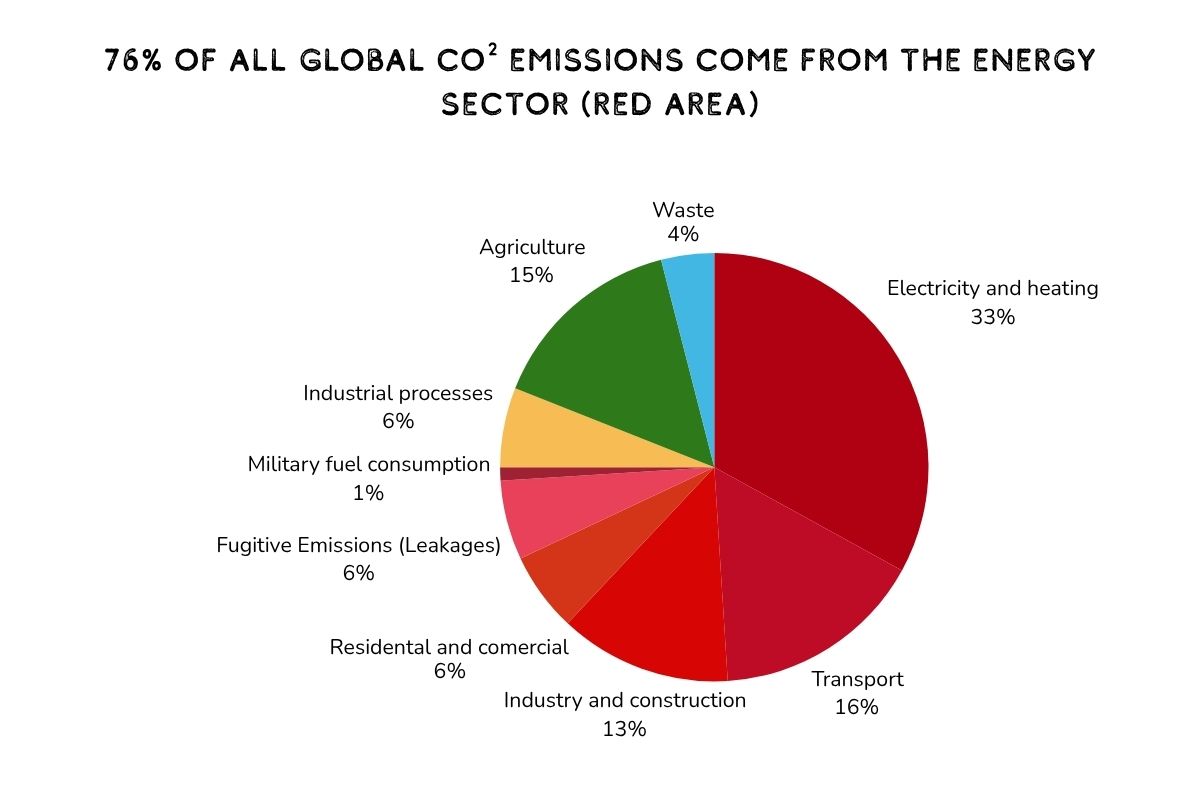
According to current data (2022), the energy sector is by far the largest source of CO₂ emissions, accounting for 76% of all global emissions. Within this sector, the main sources are:
- Electricity and heat production: 33% of global emissions
- Transport: 16%
- Industry and construction: 13%
- Residential and commercial: 6%
- Fugitive emissions (e.g., leaks): 6%
- Military fuel use: 1%
A total of around 50.1 billion tonnes of CO₂-equivalents are emitted annually.
The Role of Agriculture
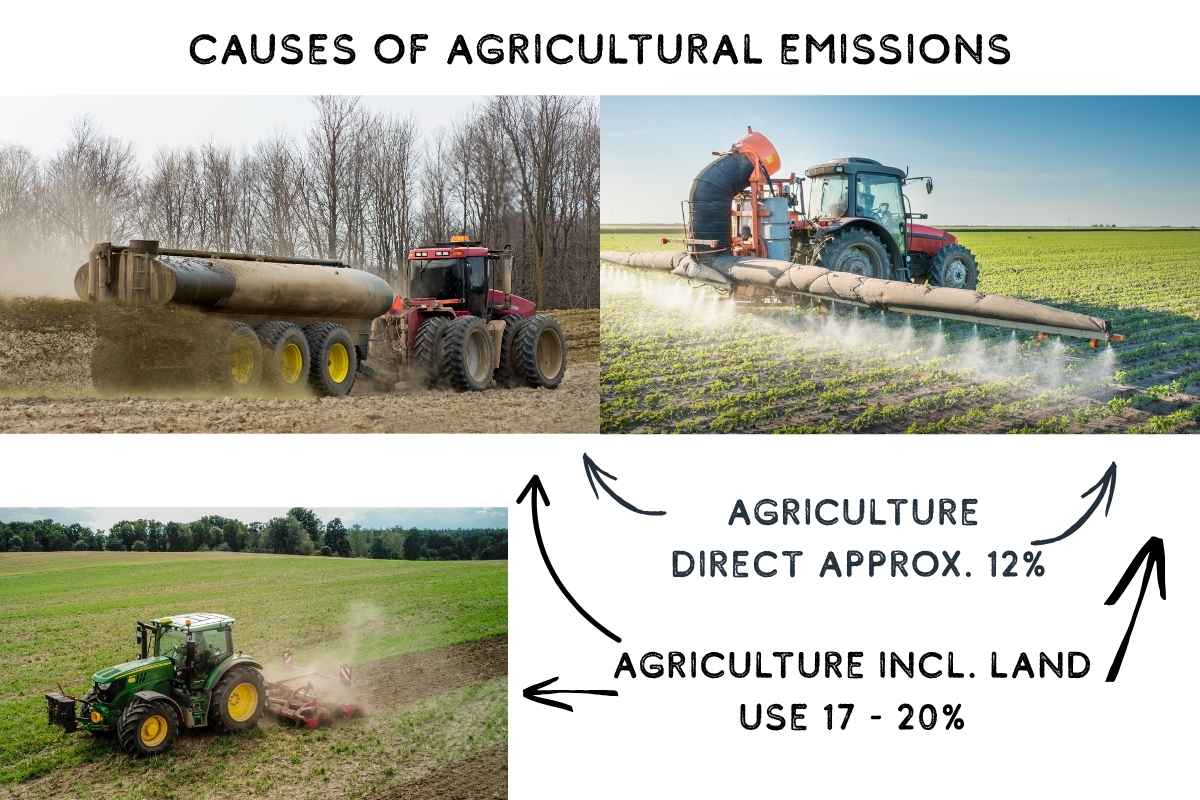
Agriculture accounts for about 12% of global CO₂ emissions when considering only direct agricultural activities. However, this figure does not include all relevant agricultural emissions, especially those from land-use changes and plowing.
When land-use changes (e.g., deforestation, draining of wetlands) are included, agriculture’s share rises to about 17–20% of global greenhouse gas emissions. In CO₂-equivalent terms, this means 9.3 to 11.1 billion tonnes per year.
The Impact of Plowing
Plowing farmland is often an overlooked factor. According to international soil scientists such as Dr. John Baker, plowing releases 15–20% of the CO₂ in the atmosphere worldwide. This is an impressive figure, but it refers to the share of CO₂ released from the soil by plowing, not to total human-caused CO₂ emissions. This means that plowing releases large amounts of CO₂ previously stored in the soil, significantly affecting agriculture’s climate balance.
However, it is important to note that this 15–20% of atmospheric CO₂ is not the same as 15–20% of total human-made CO₂ emissions, but rather refers to the share of CO₂ released from soil into the atmosphere by plowing. In the overall agricultural emissions balance, plowing represents a significant but difficult-to-quantify share, as soil emissions are hard to measure and not always included in official statistics.
Key Figures at a Glance
Sector Share of Global CO₂ Emissions (2022) Note
Energy 76% Electricity, heat, transport, industry
Agriculture (direct) 12% Excludes land use and plowing
Agriculture (incl. land use) 17–20% Includes deforestation, plowing, etc.
Conclusion
The energy sector is the largest source of CO₂ emissions at 76%.
Agriculture directly contributes about 12%; with land-use changes and plowing, its share rises to 17–20% of global greenhouse gas emissions.
Plowing itself is responsible for 15–20% of the atmospheric CO₂ released from soil—a significant but often underestimated factor.
Anyone who takes climate protection seriously must consider all sectors—and especially in agriculture, it is worthwhile to focus on soil-friendly cultivation methods.
Author, Francesco del Orbe 🌍


