
– What happens then
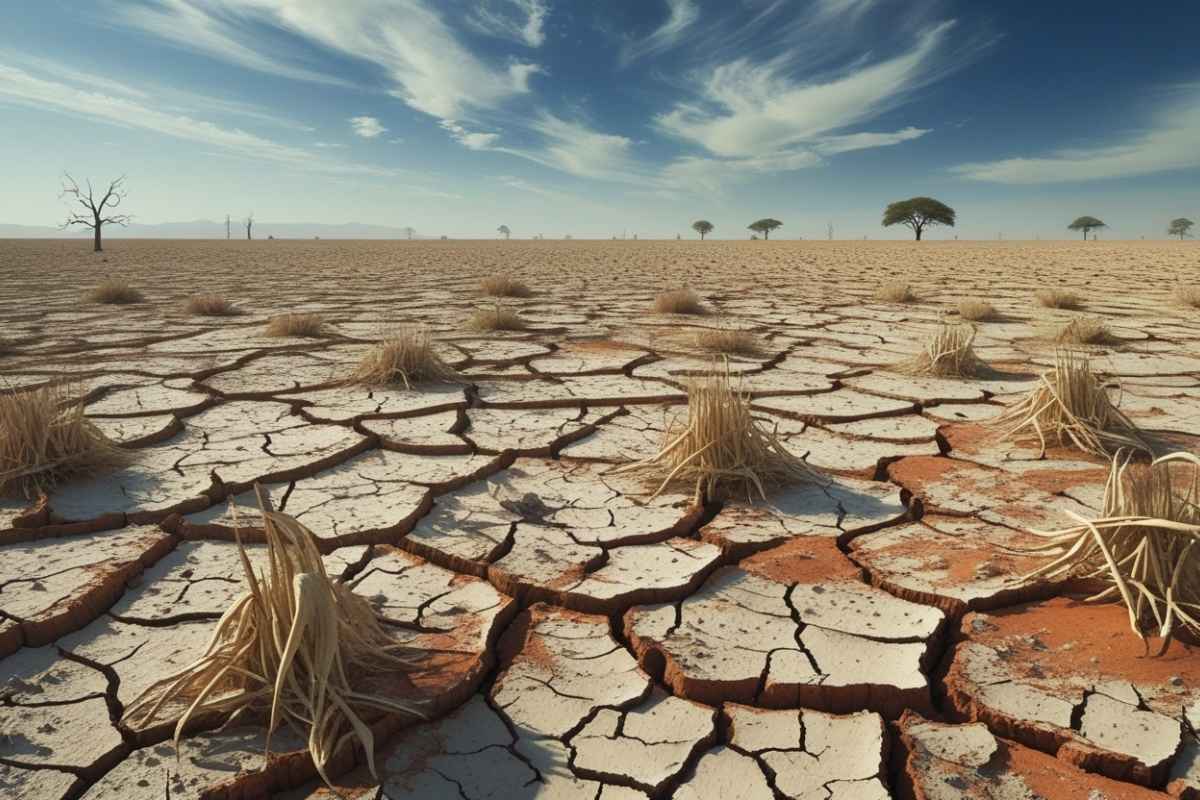
When agricultural land becomes degraded, it means that fertile soil gradually loses its quality until the land is barely usable for farming. This process is known as land degradation, desertification, or desert formation. Desertification is a growing problem around the world. In Europe, for example, the risk is highest in southern Portugal, parts of Spain and southern Italy, southeastern Greece, Malta, Cyprus, and in border areas near the Black Sea in Bulgaria and Romania.
What exactly happens when agricultural land degrades?
• Loss of vegetation: Overgrazing, intensive farming, deforestation, or improper irrigation cause the protective plant cover to disappear. The soil is left exposed to wind and water.
• Soil erosion: Wind and water wash away the fertile topsoil. This leads to a loss of essential nutrients and humus needed for plant growth. The soil becomes increasingly infertile.
• Drying out and salinization: Without plants, the soil can no longer retain water. It dries out, becomes sandy or salty, especially in dry regions. Groundwater levels drop and water quality deteriorates.
• Loss of biodiversity: Plants and animals that depend on fertile soils disappear. Landscapes become more monotonous and ecosystems lose stability.
• Impact on agriculture: Crop yields decline, harvest failures increase. Eventually, the land can no longer be cultivated. This leads to economic losses and threatens food security.
What are the causes?
• Intensive agriculture: Too frequent use, short fallow periods, heavy machinery, and monocultures lead to soil compaction and nutrient depletion.
• Overgrazing: Too many animals graze the land, removing vegetation and leaving the soil exposed.
• Deforestation: Trees and shrubs are cleared to make space for farmland or settlements. The protective vegetation is lost.
• Climate change: Extreme weather events such as droughts or heavy rains intensify erosion and accelerate desertification.
• Improper irrigation: Too much or too little water and poor irrigation practices lead to salinization or drying of the soil.
What are the consequences for people and the environment?
• Food security: Food production declines, hunger and poverty increase, especially in developing countries.
• Migration: People leave their homes because they can no longer live off the land. This leads to rural exodus and social conflicts.
• Environmental destruction: Biodiversity diminishes, water cycles are disrupted, and the climate is affected.
Conclusion:
The degradation of agricultural land is a slow process, accelerated by human activity and climate change. It leads to infertile soils, declining yields, and threatens the livelihood of millions of people around the world.
Author: Francesco del Orbe


