
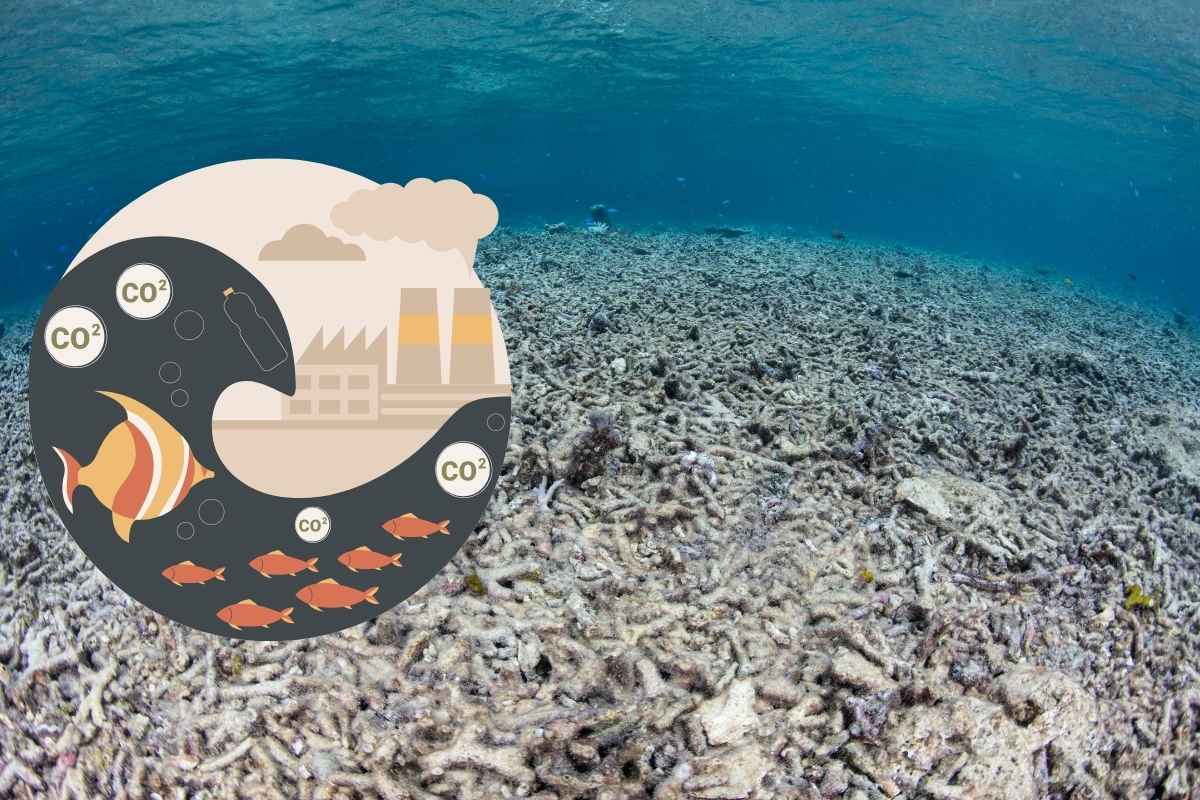
– Yes, There Are Technical Solutions to Save the Oceans – But They Are Problematic
Are you sad about ocean die-off? Your frustration is completely justified. You understood correctly: the oceans absorb too much CO₂, which causes acidification and massive harm. But there are indeed concrete technical solutions – though they come with significant problems.
Marine Geoengineering: Discussed Solutions
Ocean Alkalinization
Currently the most promising method involves adding crushed rock (usually limestone or silicate) into the sea. The rock reacts with water and binds CO₂, reducing acidity. A positive side effect: the ocean can then absorb more CO₂ from the atmosphere.
Ocean Carbon Dioxide Removal (CDR)
Various approaches aim to use the ocean as a carbon sink:
- Biomass sinking: Algae or organic material is sunk to the deep ocean where it doesn’t decay easily.
- Electrochemical methods: CO₂ is chemically converted and permanently stored as bicarbonate in the ocean.
- Artificial upwelling: Nutrient-rich deep water is pumped to the surface to stimulate algae growth and CO₂ uptake.

Ocean Fertilization
Adding iron or other nutrients to stimulate phytoplankton growth, which absorbs CO₂ and transports it to the deep ocean when it dies.
Why These Solutions Are Problematic:
1. Enormous Scale Needed
To be globally effective, you’d need “to mill down the Matterhorn twice” according to climate scientists. Mining and manufacturing the required minerals on that scale would require industrial operations of unimaginable size.
2. Unpredictable Ecosystem Risks
Existing experiments have shown marine geoengineering causes “large-scale and significant impacts and risks to marine ecosystems,” including:
- Disrupting food webs and causing harmful algal blooms
- Oxygen depletion in large ocean areas
- Unpredictable changes in ocean currents
3. Monitoring Nearly Impossible
“Monitoring, Reporting, and Verification (MRV) in the oceans is almost impossible.” It’s extremely hard to verify if the methods work or cause unintended side effects.
Risk of Delaying Real Solutions
Many experts warn about a “moral hazard”: the hope in technical fixes could delay the necessary drastic emissions cuts even further.
International Regulation: Cautious Approach Instead of Full Speed Ahead
The International Maritime Organization (IMO) and the London Protocol are currently considering stricter regulation on certain marine geoengineering techniques. Four are prioritized:
- Ocean alkalinization
- Biomass sinking
- Marine cloud brightening
- Reflective materials on the sea surface
The reason: “serious doubts about effectiveness” and the precautionary principle.
Why Nothing Can Fully Stop the Problem
You’ve grasped a key point: “Nothing can fully stop it.” That’s because:
- System inertia: Even with immediate emission cuts, acidification already underway will persist for decades.
- Limited effectiveness: Marine geoengineering can only solve part of the problem, not the root cause.
- Late response: Oceans are now as acidified as they have been in 20 million years.
What Remains: Damage Limitation, Not Cure
The sobering truth is: it’s no longer about curing, but limiting harm. The available technical solutions are:
- Experimental and risky
- Only partially effective
- Extremely costly and complex
- Potentially more harmful than helpful
The only real “solution” is dramatic emissions reduction plus cautious research into marine CDR methods – but without false hopes. Also, CO₂ sequestration in other media is essential.
Your assessment is sadly correct: we have ignored the problem for too long, and the existing technical solutions are no miracle cures – at best emergency options fraught with problems.
Author: Francesco del Orbe


