
– Temperatures and Their Consequences
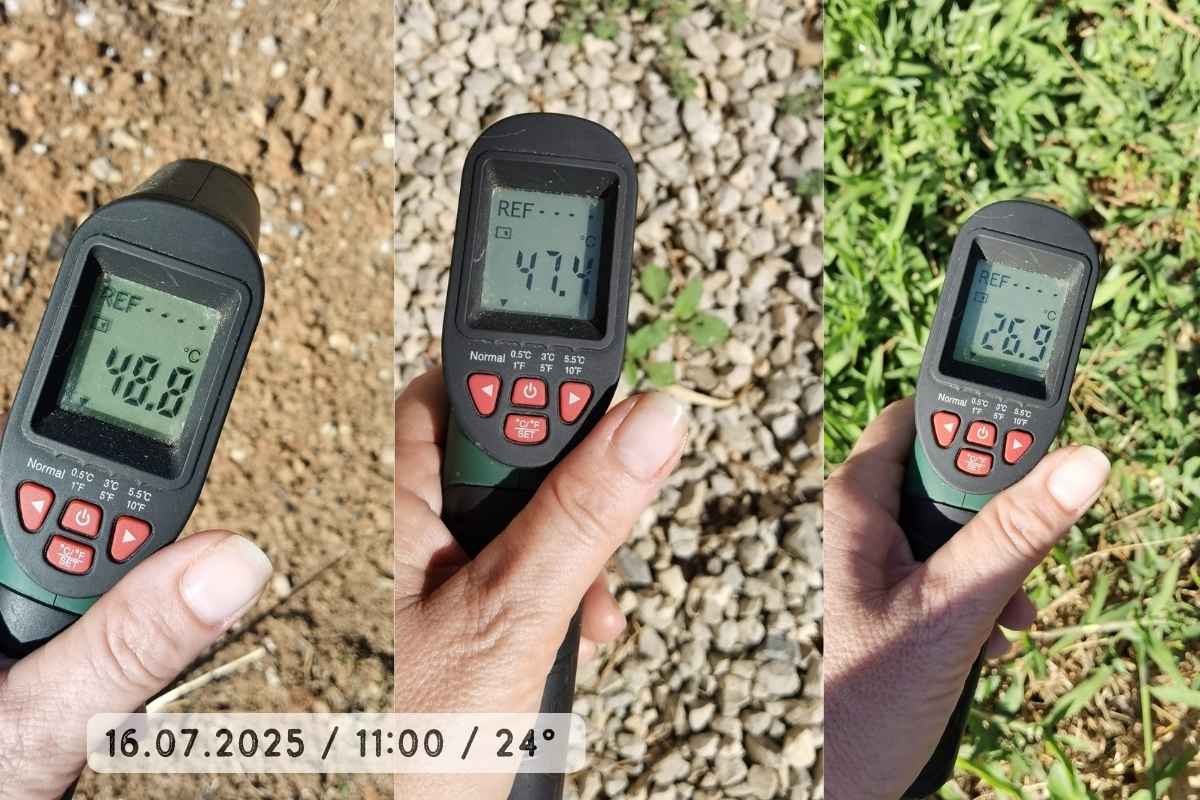
Bare soils are becoming an increasing problem, especially during prolonged heat waves and dry periods. Under direct sunlight, they heat up significantly – often even more than asphalt. This is because agricultural soil has poor heat conductivity, and its air pores act as insulation, causing the surface to become extremely hot. Measurements show that surface temperatures of tilled, uncovered soils can regularly exceed 50°C in summer – in extreme cases even reaching up to 60°C.
Consequences of Bare Soils
- Damage to Soil Life: Extreme heat kills key soil organisms such as bacteria and fungi, which are essential for soil fertility and humus formation. Many organisms stop functioning at 30°C, and die off at 44°C or higher.
- Humus Degradation: With microbial life dying and heat-tolerant bacteria dominating – which mainly break down organic matter – humus content declines. This weakens soil structure and fertility over time.
- Increased Erosion: Without stable soil aggregates and a protective cover of vegetation, soils are more vulnerable to wind and water erosion. Heavy rain events lead to more surface runoff and the loss of fertile soil and nutrients.
- Water Shortage: Bare soils dry out faster, as evaporation increases and water is no longer effectively retained. Soil moisture decreases, further weakening plant growth and soil biology.
- Nutrient Loss: Essential nutrients are lost through erosion and leaching and are no longer available for plants.
Measures to Prevent Soil Overheating
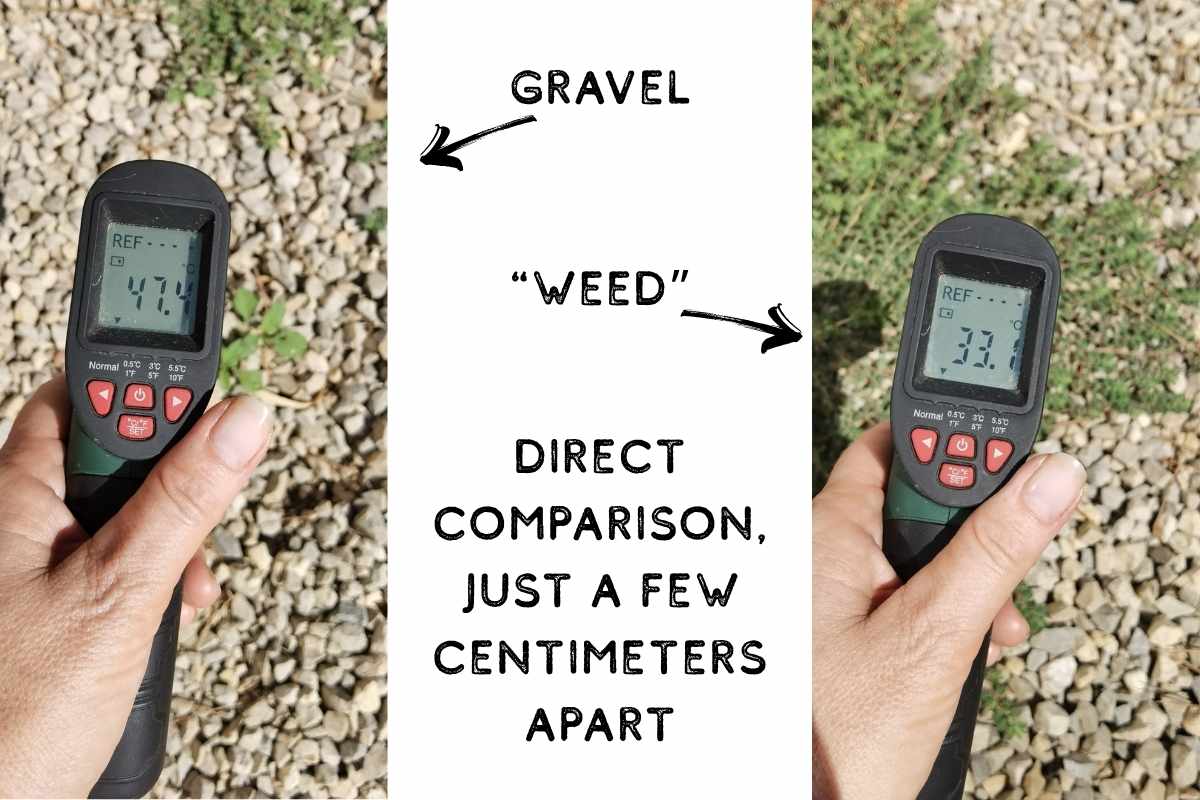
- Soil Cover: Green manures, cover crops, or mulch layers protect soil from direct sunlight and significantly reduce surface temperatures – often by 15 to 20°C compared to bare land.
- Plant Diversity: Mixed cropping and diverse cover crop blends create multiple layers of foliage that provide shade and help maintain soil moisture.
- Reduced Tillage: No-till and mulch-seeding approaches help preserve soil structure and reduce evaporation.
Conclusion
In times of climate change, bare soils are especially vulnerable. They overheat, lose fertility, and are prone to erosion and humus loss. Maintaining continuous soil cover is one of the most important strategies for preserving soil fertility and reducing the impacts of heat and drought.
Autor: Francesco del Orbe 🌍


