
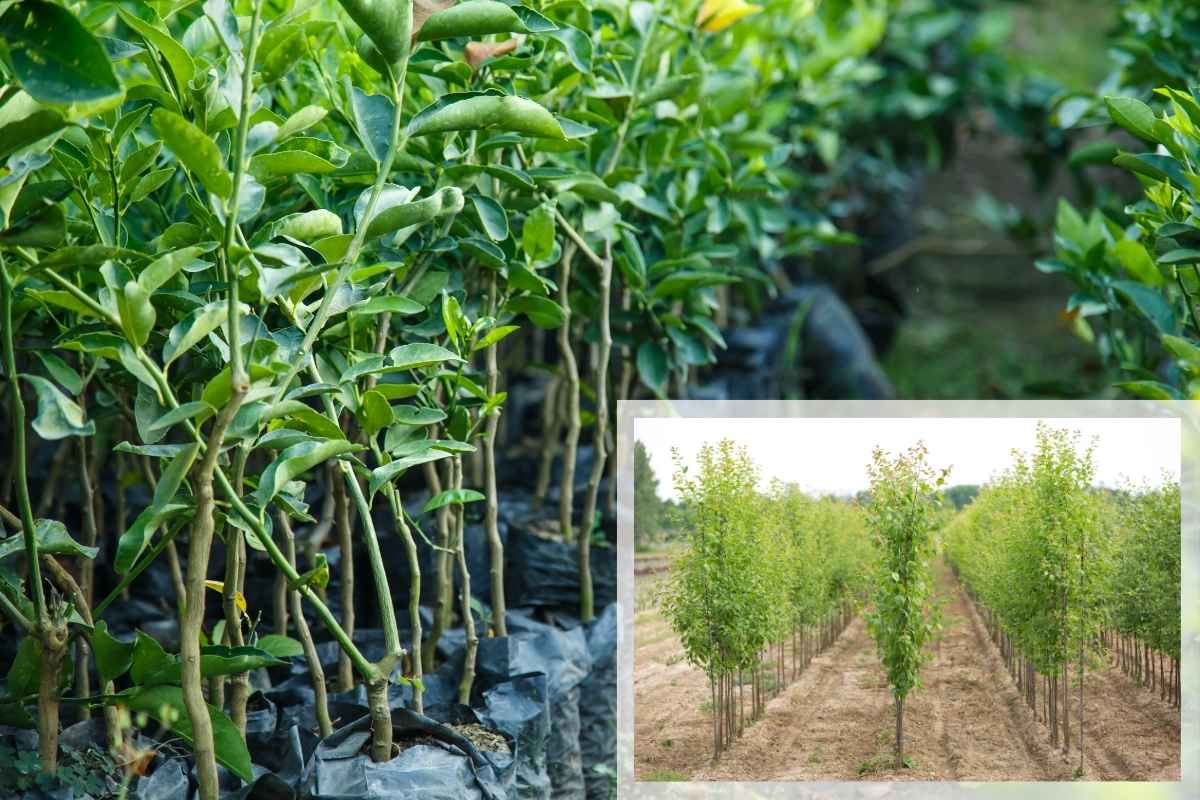
– An Overview
Many tree species offer ecological and agricultural benefits similar to Paulownia, especially regarding rapid growth, high biomass production, soil protection, erosion control, restoration of degraded land, and versatile uses. Here is an overview of the main alternatives and their unique characteristics:
Comparison Table: Tree Species with Similar Benefits to Paulownia
| Tree Species | Benefits Similar to Paulownia | Special Characteristics |
| Poplar (Populus) | Very fast growth, high CO₂ capture, erosion control | Commonly used in afforestation and agroforestry systems |
| Willow (Salix) | Rapid growth, strong roots, effective erosion control | Especially suitable for wet and erosion-prone soils |
| Eucalyptus | Extremely fast growth, high biomass yield | Tolerates poor soils, high water consumption |
| Black Locust | Nitrogen fixation, soil improvement, erosion control | Improves soil fertility, invasive in some regions |
| Acacia | Nitrogen fixation, fast growth, soil improvement | Particularly valuable in dry regions |
| Pine | Deep roots, fast growth, timber production | Common in afforestation and land restoration |
| Larch | Fast growth, deep roots, timber production | Good for cool and mountainous regions |
| Bamboo | Very rapid growth, soil protection, versatile use | Botanically not a tree, but ecologically very effective |
| Casuarina | Deep roots, erosion protection, wind protection | Particularly used on coasts and in dry areas. |
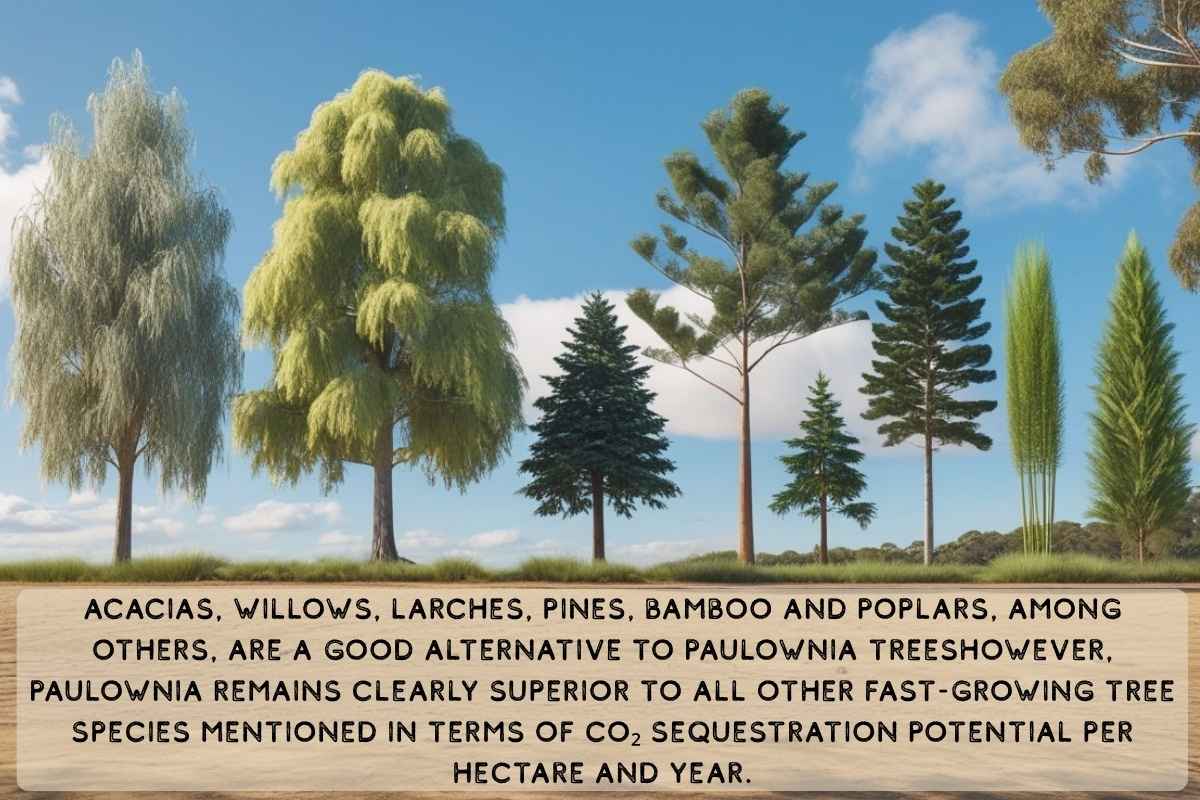
Common Benefits
• Fast Growth and High Biomass Production: Enables rapid CO₂ capture and quick restoration of areas with little vegetation.
• Erosion Control: Strong, deep, or extensive root systems stabilize soil and prevent erosion, similar to Paulownia.
• Soil Improvement: Some species (e.g., Black Locust, Acacia) fix nitrogen and enrich the soil with nutrients.
• Versatile Uses: Timber, biomass, fodder, windbreak, shade, habitat for biodiversity.
• Restoration of Degraded Land: Many of these trees also grow on nutrient-poor or damaged soils and are suitable for reclamation projects.
CO₂ Capture Comparison
| Tree Species | CO₂ Capture (t/ha/year) | Notes/Sources |
| Paulownia | 47 (up to 100, optimal) | Very fast-growing, peak value |
| Poplar | 10–15 | Fast-growing |
| Eucalyptus | 8–15 | Fast-growing, drought-resistant |
| Willow | 10–15 | Fast-growing, moist sites |
| Acacia/Black Locust | 8–15 | Nitrogen fixers, robust |
| Japanese Cedar | 10 | Reference species |
| Average | 1.8 | Global average |
Paulownia binds at least twice as much CO₂ as poplar, eucalyptus, willow, acacia, or black locust per area and year—and under optimal conditions, even much more.
Special Notes:
• Poplar, willow, and eucalyptus are especially suitable for rapid afforestation, erosion control, and biomass production.
• Black locust and acacia additionally improve soil through nitrogen fixation.
• Bamboo is not a tree, but fulfills many ecological functions very efficiently.
• Eucalyptus and black locust, like Paulownia, can be invasive in some regions and should be used with caution.
Conclusion
Besides Paulownia, poplar, willow, eucalyptus, black locust, acacia, pine, larch, casuarina, and bamboo offer similar benefits for combating soil degradation, erosion control, rapid CO₂ capture, and agricultural integration. The selection should always be adapted to local environmental conditions and potential ecological risks.
However, Paulownia remains clearly superior to all other fast-growing tree species mentioned in terms of CO₂ capture potential per hectare and year, making it one of the most effective tree species for climate protection and afforestation projects.
Author: Francesco del Orbe


